18:26
Telegram launches Money, its built-in crypto wallet: Here's how it works

15:05
Telegram Desktop vulnerability allowed attackers to steal files with one click

12:33
Anthropic will ban repeated abuse of Claude under new usage rules

12:02
Apple could unveil its first touchscreen MacBook Pro on October 27

11:46
Meta bans TikTok ads on Facebook and Instagram in seven countries

11:25
Apple reportedly cuts iPhone 18 Pro orders just weeks after launch
18:26
Telegram launches Money, its built-in crypto wallet: Here's how it works
15:05
Telegram Desktop vulnerability allowed attackers to steal files with one click
12:33
Anthropic will ban repeated abuse of Claude under new usage rules
12:02
Apple could unveil its first touchscreen MacBook Pro on October 27
11:46
Meta bans TikTok ads on Facebook and Instagram in seven countries
11:25
Apple reportedly cuts iPhone 18 Pro orders just weeks after launch
18:26
Telegram launches Money, its built-in crypto wallet: Here's how it works
15:05
Telegram Desktop vulnerability allowed attackers to steal files with one click
12:33
Anthropic will ban repeated abuse of Claude under new usage rules
12:02
Apple could unveil its first touchscreen MacBook Pro on October 27
11:46
Meta bans TikTok ads on Facebook and Instagram in seven countries
11:25
Apple reportedly cuts iPhone 18 Pro orders just weeks after launch
18:26
Telegram launches Money, its built-in crypto wallet: Here's how it works
15:05
Telegram Desktop vulnerability allowed attackers to steal files with one click
12:33
Anthropic will ban repeated abuse of Claude under new usage rules
12:02
Apple could unveil its first touchscreen MacBook Pro on October 27
11:46
Meta bans TikTok ads on Facebook and Instagram in seven countries
11:25
Apple reportedly cuts iPhone 18 Pro orders just weeks after launch

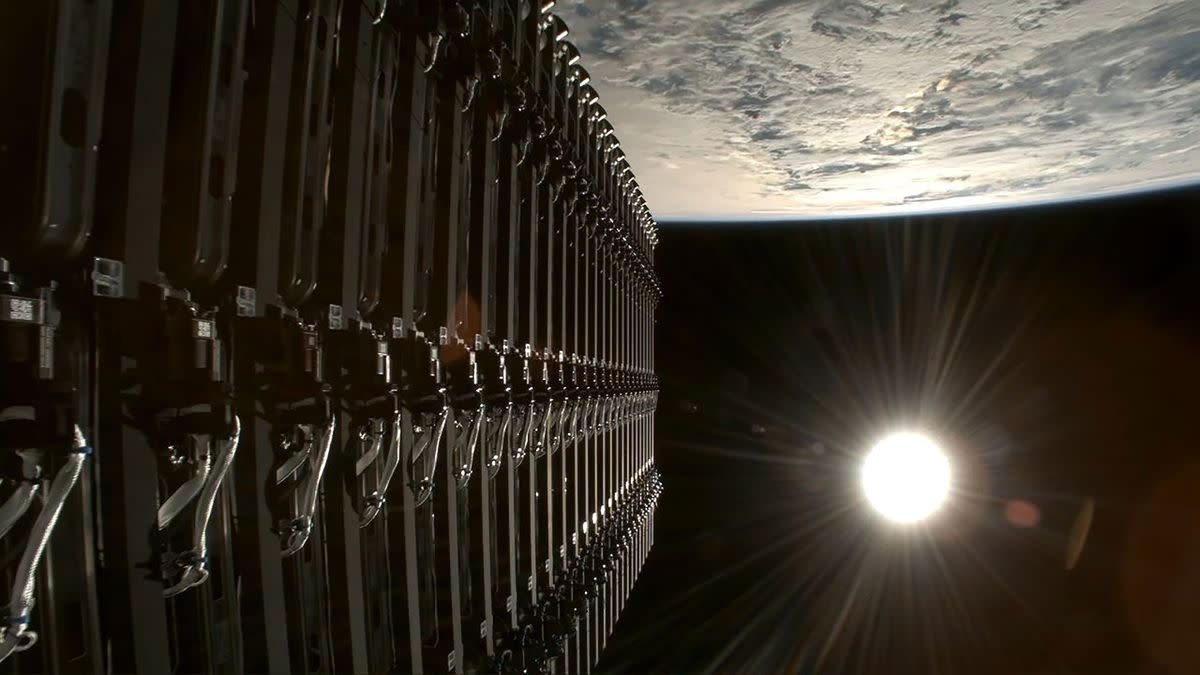
One of SpaceX’s Starlink satellites malfunctioned unexpectedly and was photographed in orbit shortly before leaving its trajectory and burning up in Earth’s atmosphere.
The incident occurred on December 17, 2025, involving Starlink satellite No. 35956, which had been launched relatively recently. The spacecraft experienced a serious anomaly. Preliminary data suggests a fuel tank failure that led to the release of propellant.

As a result, the satellite lost altitude and entered an uncontrolled descent toward Earth. SpaceX later confirmed that the spacecraft would fully disintegrate during atmospheric reentry.
The incident drew particular attention from SpaceX engineers due to the unusual nature of the damage. Debris was observed around the satellite, raising the possibility of either an internal failure or a collision with space debris. Newer versions of Starlink use argon as propellant for electric plasma thrusters, stored under pressure. A spontaneous tank rupture, however, is considered unlikely.
To investigate the cause, SpaceX contacted satellite imaging operator Vantor, formerly known as Maxar. The following day, the WorldView-3 satellite captured a high-resolution image of the damaged Starlink spacecraft from a distance of approximately 241 km over Alaska. The image resolution was about 12 cm per pixel. Visually, the satellite appeared largely intact, with no obvious external structural damage, a detail that may help SpaceX reconstruct the sequence of events.










Editor’s pick