21:12
SpaceX wins approval for up to 1 million data center satellites

20:33
GPT-6.2 users will hit limits up to 40% faster after OpenAI fixes billing error

11:34
WhatsApp adds scheduled messages for individual and group chats

11:13
1Password breach exposed customer data, but company says password vaults were unaffected

10:43
ChatGPT and Codex will share usage limits starting in December

20:28
Nvidia may cut gaming GPU supplies by another 20–30%, report says
21:12
SpaceX wins approval for up to 1 million data center satellites
20:33
GPT-6.2 users will hit limits up to 40% faster after OpenAI fixes billing error
11:34
WhatsApp adds scheduled messages for individual and group chats
11:13
1Password breach exposed customer data, but company says password vaults were unaffected
10:43
ChatGPT and Codex will share usage limits starting in December
20:28
Nvidia may cut gaming GPU supplies by another 20–30%, report says

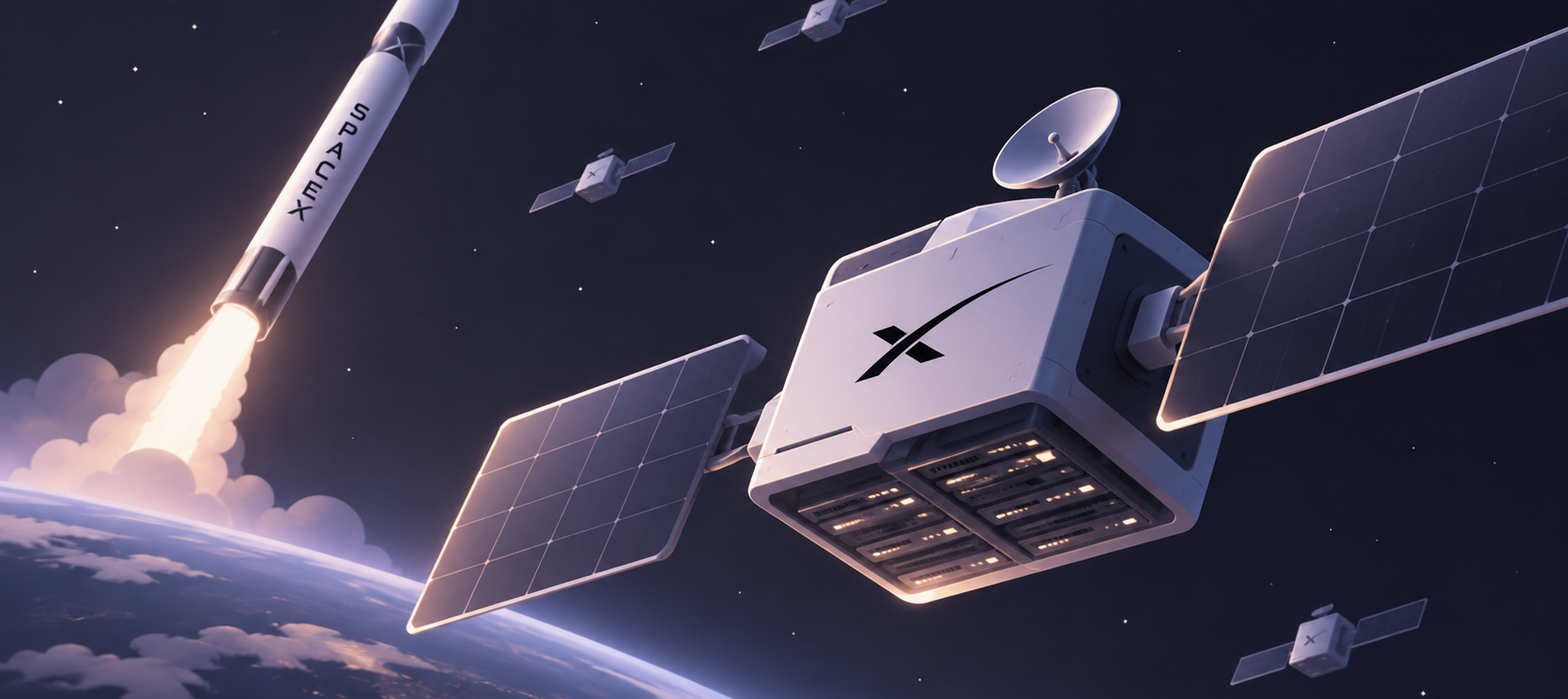
SpaceX has won conditional U.S. approval for Starmind, a network of up to one million satellites designed to run AI computing on solar power in orbit.
SpaceX describes a system that would collect solar energy, use it to power onboard AI processors and send the results back to Earth through Starlink. High-speed laser links would connect the computing satellites to one another and to the communications network.
The company also plans to manufacture advanced AI chips at Terafab, its semiconductor manufacturing project with Tesla. Starmind’s modular design would support processors from other suppliers as well.
The Federal Communications Commission authorized the constellation on November 25, calling the decision a historic first. SpaceX argues that orbital computing could help meet growing AI demand without relying on the power grids and land needed for terrestrial data centers.
Responding to the announcement on X, Elon Musk wrote: “Much appreciated. This will be a great asset to America and the world.”
SpaceX is targeting its first Starmind launch in 2027. The FCC’s license requires the first satellite to be operational by November 25, 2033, followed by 100,000 satellites by November 2035. Half the authorized constellation must be operating by November 2038 and the full network by November 2040.
Before deploying satellites above 600 kilometers, SpaceX must submit a final orbital debris mitigation plan through an application to modify its authorization. The FCC also deferred its request to allow alternative disposal methods instead of atmospheric reentry.
Google is already testing the same broad idea. It launched a Project Suncatcher prototype in October to study how its AI chips perform in space.
For the next stage, Google has selected Jeff Bezos’ Blue Origin for its first dedicated heavy-lift Suncatcher launch, targeted for the first quarter of 2029. New Glenn will carry satellites designed to provide roughly a data center rack’s worth of computing capacity each.










Editor’s pick