18:26
Telegram launches Money, its built-in crypto wallet: Here's how it works

15:05
Telegram Desktop vulnerability allowed attackers to steal files with one click

12:33
Anthropic will ban repeated abuse of Claude under new usage rules

12:02
Apple could unveil its first touchscreen MacBook Pro on October 27

11:46
Meta bans TikTok ads on Facebook and Instagram in seven countries

11:25
Apple reportedly cuts iPhone 18 Pro orders just weeks after launch
18:26
Telegram launches Money, its built-in crypto wallet: Here's how it works
15:05
Telegram Desktop vulnerability allowed attackers to steal files with one click
12:33
Anthropic will ban repeated abuse of Claude under new usage rules
12:02
Apple could unveil its first touchscreen MacBook Pro on October 27
11:46
Meta bans TikTok ads on Facebook and Instagram in seven countries
11:25
Apple reportedly cuts iPhone 18 Pro orders just weeks after launch
18:26
Telegram launches Money, its built-in crypto wallet: Here's how it works
15:05
Telegram Desktop vulnerability allowed attackers to steal files with one click
12:33
Anthropic will ban repeated abuse of Claude under new usage rules
12:02
Apple could unveil its first touchscreen MacBook Pro on October 27
11:46
Meta bans TikTok ads on Facebook and Instagram in seven countries
11:25
Apple reportedly cuts iPhone 18 Pro orders just weeks after launch
18:26
Telegram launches Money, its built-in crypto wallet: Here's how it works
15:05
Telegram Desktop vulnerability allowed attackers to steal files with one click
12:33
Anthropic will ban repeated abuse of Claude under new usage rules
12:02
Apple could unveil its first touchscreen MacBook Pro on October 27
11:46
Meta bans TikTok ads on Facebook and Instagram in seven countries
11:25
Apple reportedly cuts iPhone 18 Pro orders just weeks after launch


OpenAI has introduced GPT-Live, a new generation of voice models now powering ChatGPT’s voice mode, the company announced.
Unlike previous versions, GPT-Live uses a full-duplex architecture, meaning the model can listen and speak at the same time. It can respond with brief acknowledgments such as “mhmm” or “yeah” while the user is talking, but also remain silent when someone pauses to gather their thoughts.
When a request requires web search or more complex reasoning, GPT-Live can hand the task off to a more powerful model while keeping the conversation going as the work continues in the background. OpenAI says the background model will be upgraded as new flagship models are released.
The company has begun rolling out two versions, GPT-Live-1 and GPT-Live-1 mini, across iOS, Android, and the ChatGPT web app. GPT-Live-1 will become the default voice model for Go, Plus, and Pro subscribers, while free users will get GPT-Live-1 mini. OpenAI plans to make the models available through its API at a later date.
Earlier versions of ChatGPT Voice worked very differently. The original system relied on three separate models for speech recognition, response generation, and voice synthesis, which made conversations slower and less natural. Advanced Voice Mode later moved audio processing into a single model, but still relied on pauses to determine when the user had finished speaking. As a result, background noise could sometimes cause it to interrupt at the wrong moment.
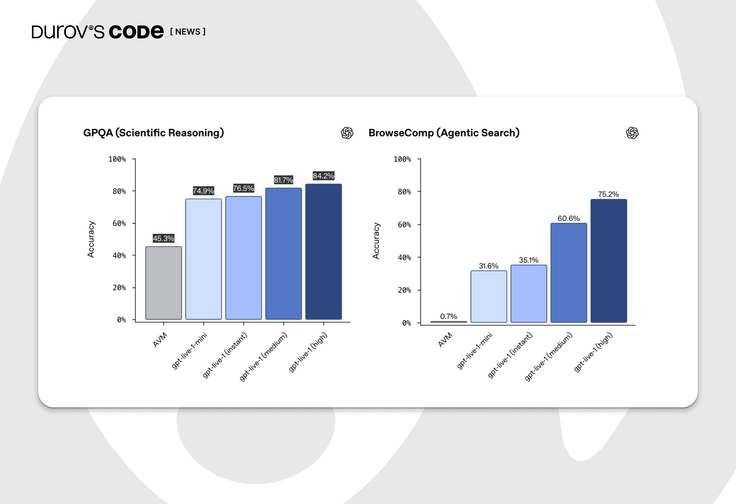
- In OpenAI’s own testing, GPT-Live-1 significantly outperformed Advanced Voice Mode on GPQA, a benchmark for expert-level scientific reasoning, and BrowseComp, which tests the ability to find difficult-to-access information online. The new model also performed better in voice-based customer support tasks.
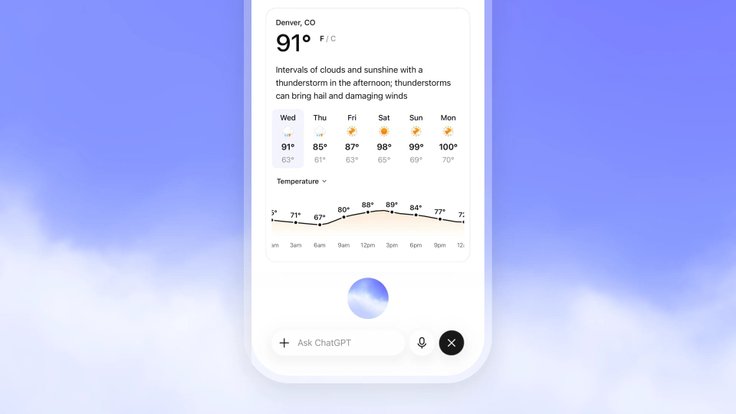
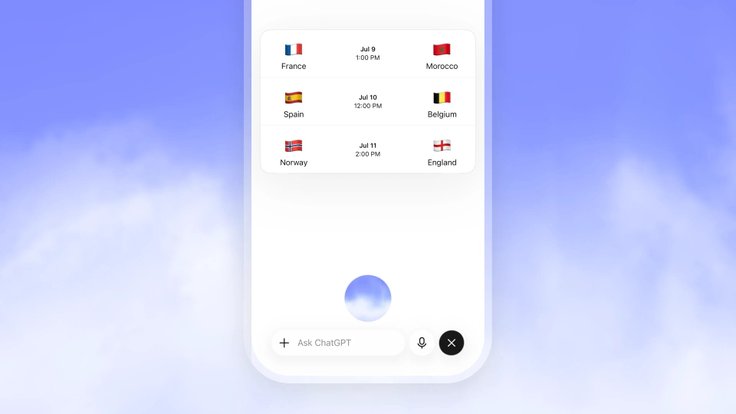
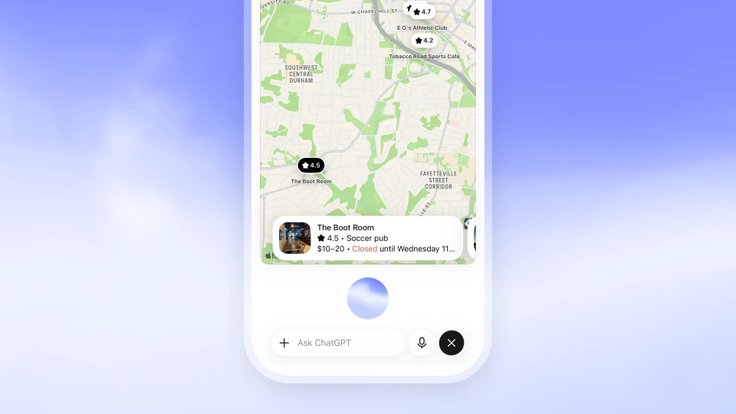
- ChatGPT Voice can now display visual cards during conversations, including weather forecasts, stock prices, and sports scores. The system is also better at filtering out background noise and is less likely to interrupt when a user pauses to think.
- OpenAI says it has also carried out additional safety testing using audio data covering self-harm, psychosis, and emotional attachment to AI. The system can adjust a potentially unsafe response during a conversation or end the interaction in critical cases, while teenagers are subject to additional restrictions and parental controls.
At launch, GPT-Live does not support voice conversations with video or screen sharing, which remain available only through earlier versions of ChatGPT Voice. The model also performs less reliably in some languages, where users may notice stronger accents or gaps in fluency.
ChatGPT’s voice mode first launched in September 2023, followed by Advanced Voice Mode in May 2024, which introduced more natural and expressive conversations. OpenAI has also recently introduced a new generation of text models, GPT-5.6 Sol, Terra, and Luna.
 Vlad Voitenko








Editor’s pick