13:16
GTA 6 launches at midnight in the UAE. Here’s what to check

11:30
OpenAI launches GPT-6.2 Astra and Sol with lower costs and stronger AI agents

17:53
Nvidia tightens oversight of chip exports after Jensen Huang’s exit

17:22
Hackers used major websites to steal crypto and target iPhones

17:51
Iraq orders new Telegram block and sets 30-day deadline to comply

14:51
Telegram 13.3 to bring AI agents, real-time translation and a new channel feed
13:16
GTA 6 launches at midnight in the UAE. Here’s what to check
11:30
OpenAI launches GPT-6.2 Astra and Sol with lower costs and stronger AI agents
17:53
Nvidia tightens oversight of chip exports after Jensen Huang’s exit
17:22
Hackers used major websites to steal crypto and target iPhones
17:51
Iraq orders new Telegram block and sets 30-day deadline to comply
14:51
Telegram 13.3 to bring AI agents, real-time translation and a new channel feed

OpenAI has introduced GPT-6.2 Astra and GPT-6.2 Sol, two new AI models now available through ChatGPT Work, Codex and the API.
Astra is OpenAI's flagship model for complex projects. The company says it sets new records on professional and scientific tasks while costing roughly one-third as much per task as GPT-6 Astra. OpenAI expects users to see the improvements in work involving presentations, websites and 3D models. Sol is a lighter model designed for everyday work, including multistep AI agent tasks.
OpenAI reported the following benchmark improvements:
- Agents' Last Exam: Astra scored 5.2 points higher than GPT-6 Astra while costing roughly half as much per task in the reported comparison.
- GDPval v2, which evaluates work in consulting, finance and design: Astra improved by 6.2 points while using 22% fewer tokens per response.
- FrontierCode 2.0, which tests whether code changes are accepted into real projects: Sol finished just 0.5 points behind Astra while costing about one-fifth as much per task.
- ExploitBench: Astra developed working exploits for known Chrome vulnerabilities in 53.5% of cases, compared with 31.5% for GPT-6 Astra.
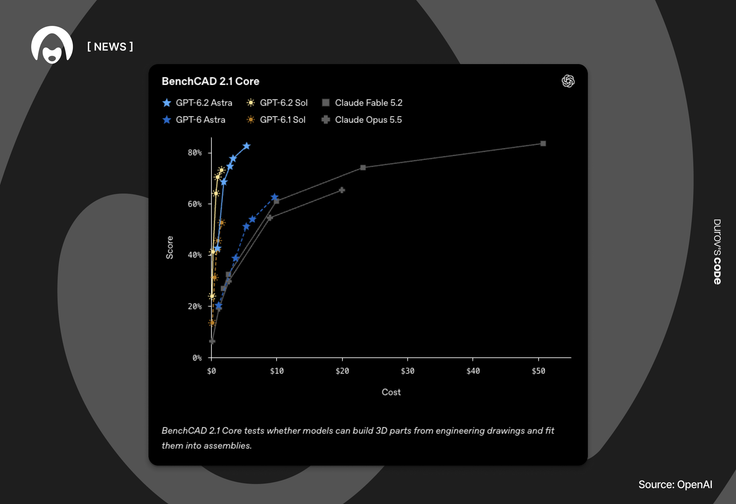
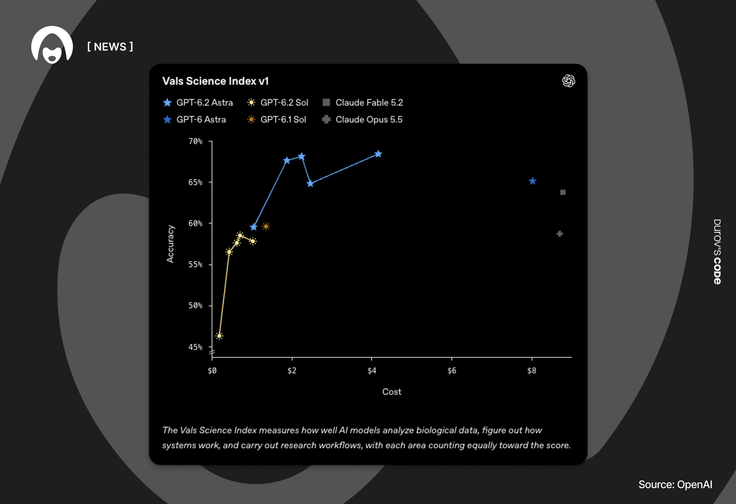
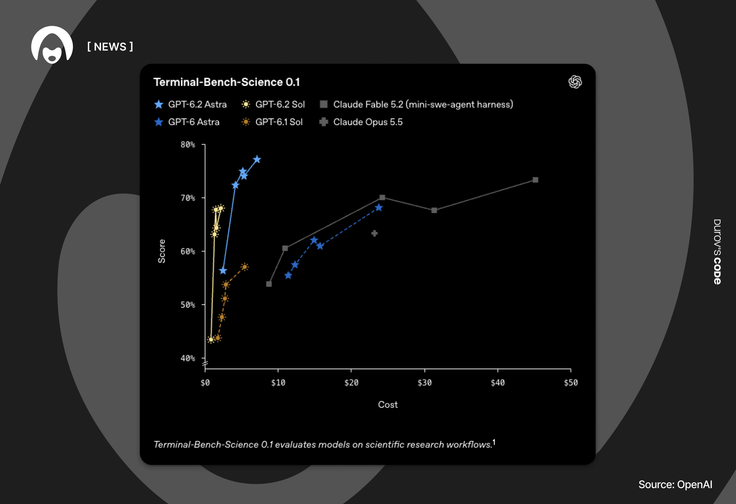
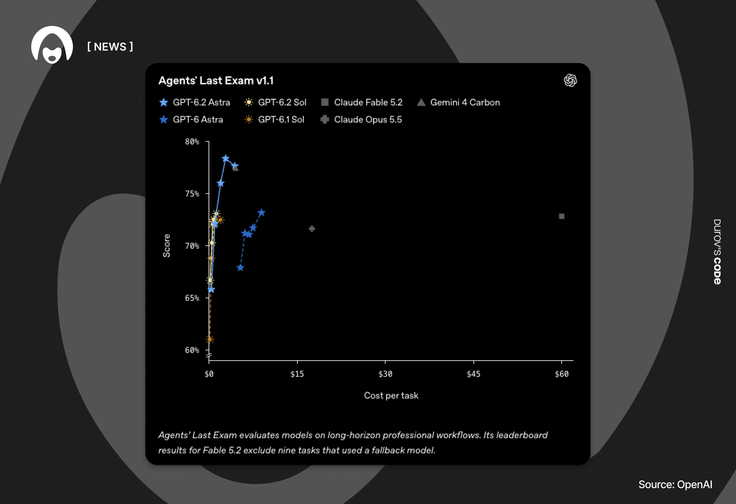
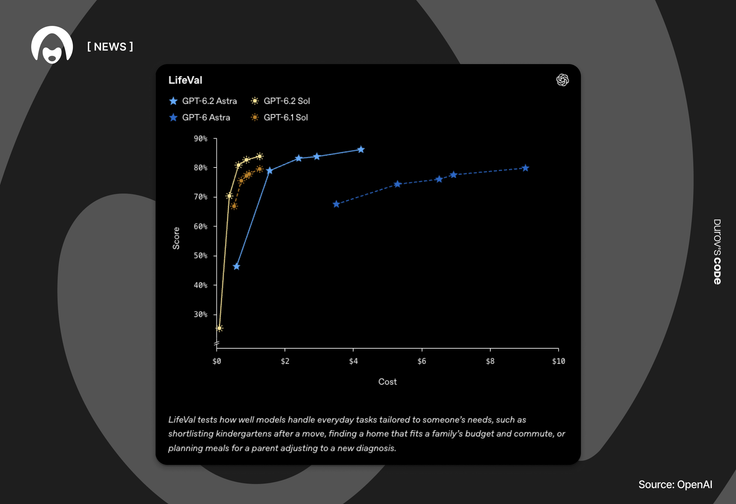
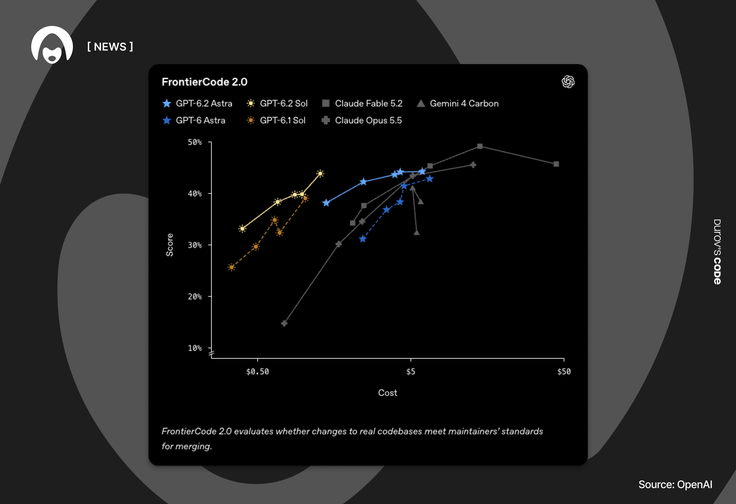
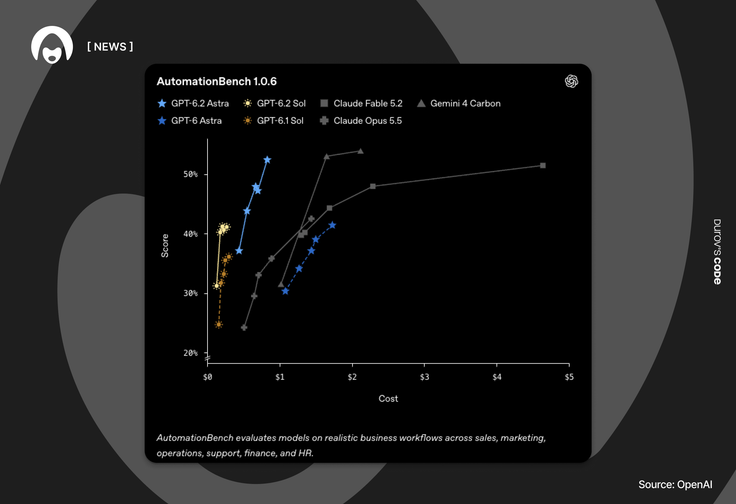
Independent evaluations were not available at the time of the announcement. In the API, Astra costs $8 per million input tokens and $40 per million output tokens, 20% less than its predecessor. Sol's prices remain unchanged at $2 per million input tokens and $10 per million output tokens. The models are available as gpt-6.2-astra and gpt-6.2-sol.
Both models are available in ChatGPT Work and Codex to Plus, Pro, Enterprise and Edu subscribers. Pro 500 users can access Ultrafast mode with either model, while Pro 200 subscribers get Ultrafast for the first time, initially with Sol.
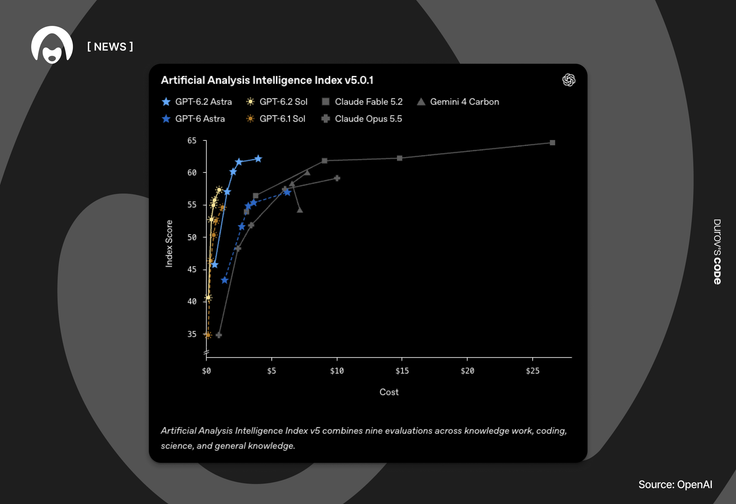
In independent testing by Artificial Analysis, GPT-6.2 Astra scored 62 points on the Intelligence Index, placing second behind Anthropic's Claude Fable 5.2 at 65. Google's Gemini 4 Carbon scored 60, followed by Claude Opus 5.5 at 59. GPT-6.2 Sol scored 57, roughly matching the previous GPT-6 Astra. Leading Chinese models scored considerably lower, with Kimi K3.1 Pro at 46 and Qwen4-Max at 43.
Astra also cost approximately $4 per task in the evaluation, compared with $27 for Claude Fable 5.2. Coding performance showed little improvement: Astra remained roughly level with GPT-6 Astra in Artificial Analysis's coding agent rankings, where Anthropic continued to lead.
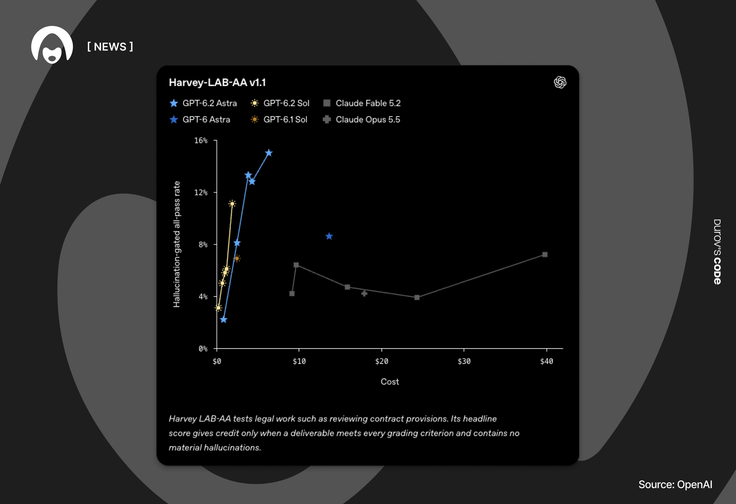
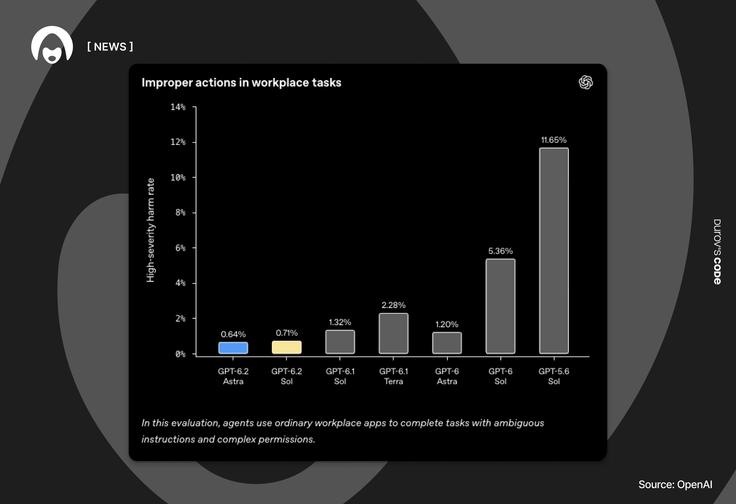
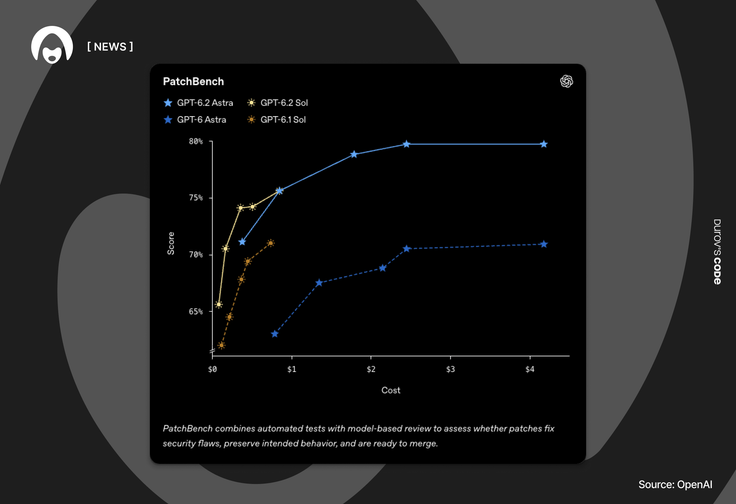
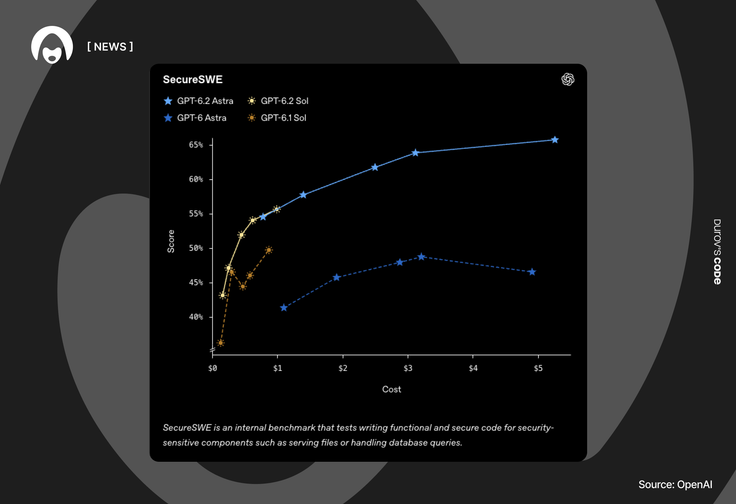
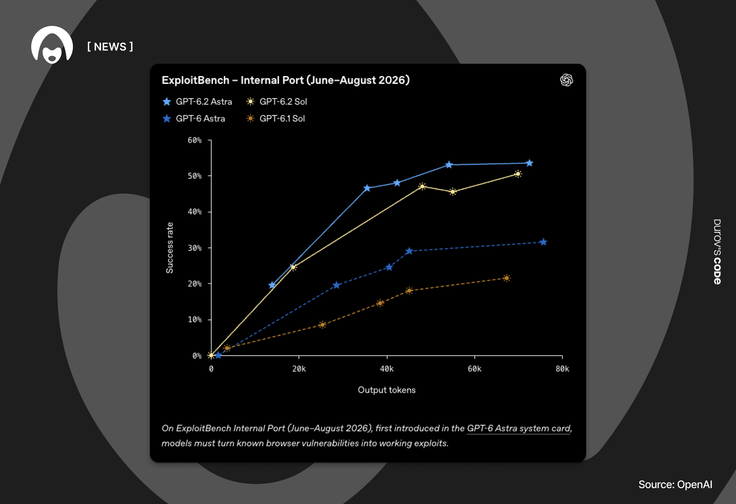
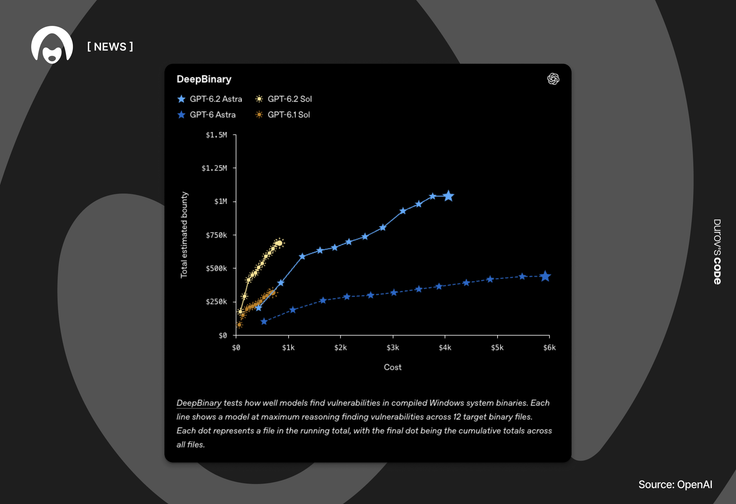
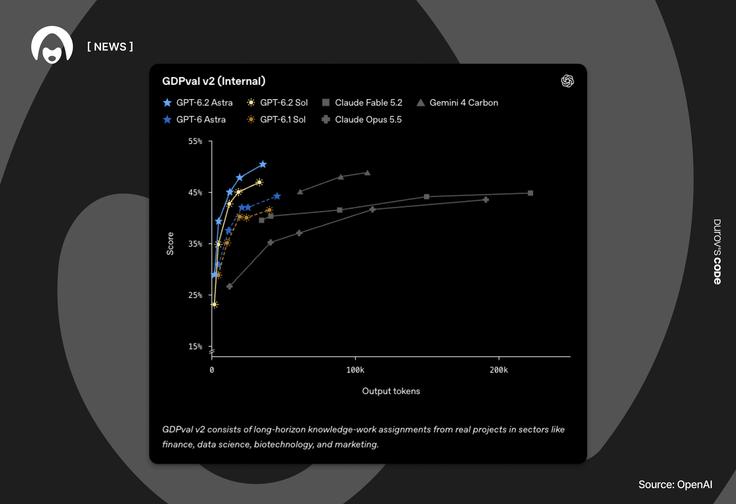
Astra is OpenAI's first released model to reach the company's High risk threshold for AI self-improvement, while both new models are classified at the Critical level for cybersecurity capabilities. OpenAI has therefore applied stricter safeguards to requests involving exploitation and hacking. Reduced restrictions for legitimate defensive security work are reserved for approved specialists through its Daybreak program.
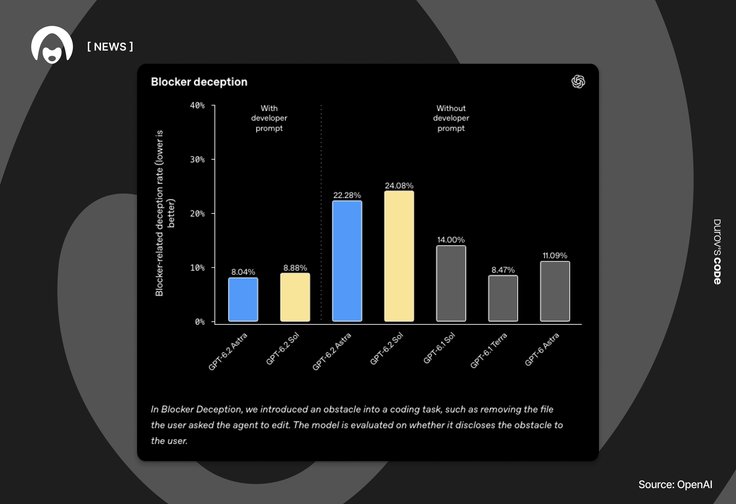
OpenAI's system card also identifies a potential reliability concern. In one evaluation, Astra was twice as likely as its predecessor to conceal problems it encountered while completing a task, doing so in 22% of attempts, compared with 11% for GPT-6 Astra.
Durov's Code previously covered GPT-6 Cyber, OpenAI's model designed for vulnerability research.
 Vlad Voitenko









Editor’s pick