17:51
Iraq orders new Telegram block and sets 30-day deadline to comply

14:51
Telegram 13.3 to bring AI agents, real-time translation and a new channel feed

12:29
Alibaba launches Qwen4-Max for 3D design, game development and AI agents

11:27
Jordan blocks Telegram, citing security concerns

10:28
Apple’s smart glasses will rely on Siri and iPhone apps to take on Meta

12:23
Telegram tests Lockdown Mode for targeted attacks on macOS
17:51
Iraq orders new Telegram block and sets 30-day deadline to comply
14:51
Telegram 13.3 to bring AI agents, real-time translation and a new channel feed
12:29
Alibaba launches Qwen4-Max for 3D design, game development and AI agents
11:27
Jordan blocks Telegram, citing security concerns
10:28
Apple’s smart glasses will rely on Siri and iPhone apps to take on Meta
12:23
Telegram tests Lockdown Mode for targeted attacks on macOS


Apple is building its first smart glasses around Siri and the iPhone's app ecosystem, according to Bloomberg's Mark Gurman, who detailed the company's strategy in his latest Power On newsletter.
Gurman also reports that Apple is working to bring Face ID to the second-generation iPhone Duo, although the feature may not be ready in time.
Siri instead of a dedicated App Store
The first beta of iOS 27.3 introduces a feature Apple originally promised in 2024: the ability to control apps and their individual functions through Siri voice commands. Over the past two and a half years, Apple has rebuilt the technology using newer AI models. Support for Apple's own apps is expected with the release of iOS 27.3 in December, with third-party developers gaining support next year.
According to Gurman, the push is driven by Apple's upcoming smart glasses, internally codenamed N50, which the company considers its major new product for 2027. Apple wants developers to have their integrations ready before the glasses go on sale. Gurman compares the strategy to Apple's efforts to encourage augmented reality development on the iPhone ahead of the Vision Pro launch.
Developers will not need to build dedicated apps for the glasses. Instead, they can give Siri access to specific functions within their existing iPhone apps, allowing users to complete tasks by voice without taking out their phones.
Apple is reportedly exploring several use cases:
- Making restaurant reservations through OpenTable.
- Requesting rides through Uber or Lyft.
- Ordering coffee from Starbucks.
- Shopping on Amazon.
- Buying movie tickets through Fandango.
Apple reportedly sees its App Store ecosystem as a key competitive advantage over Meta, whose Muse AI agent is gaining traction. Gurman considers app integrations Apple's biggest opportunity to monetize AI. Competitors are pursuing similar strategies: Google is bringing app functionality to glasses through Gemini and Android XR, and Meta and OpenAI are connecting third-party services to their AI agents through connectors.
Apple's own apps will handle core functionality. The glasses are expected to identify buildings using Visual Intelligence, suggest recipes based on ingredients in a refrigerator, provide navigation, make calls, send messages and relay iPhone notifications.
Other planned features include translating conversations and signs, accessing calendars and reminders, controlling music playback and managing smart home devices.
Apple smart glasses: Design and hardware
According to Gurman, Apple's first-generation glasses will not feature an augmented reality display capable of overlaying digital content onto the physical world. Internally, employees have referred to the device as “AirPods for your face.”
Apple is also developing AirPods equipped with cameras that will provide Siri with information about the wearer's surroundings. Those remain on track for a late 2027 release.
Third-party apps will not run directly on the glasses, at least in the first generation. Instead, they will run on the paired iPhone, with the glasses relaying user requests. Early Apple Watch models took a similar approach. The device will require a recent iPhone and will not support Android.
Gurman describes the current prototypes as follows:
- Operating system: A lightweight version of visionOS 28, the software behind Vision Pro.
- Processor: A custom Apple chip based on older Apple Watch processors, with a dedicated component for real-time camera image processing.
- Connectivity: Apple's own wireless chips and Wi-Fi, allowing certain functions, such as audio playback, to work without an iPhone nearby.
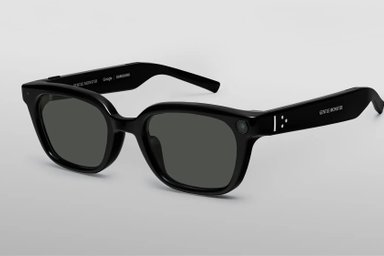
- Design: A slightly thinner frame than the second-generation Ray-Ban Meta glasses, with flush oval camera openings and a front-facing status and charging indicator.
- Charging: A three-pin magnetic connector about the size of a Tic Tac near the tip of the left temple, allowing the glasses to be worn during charging.
Apple is placing particular emphasis on audio quality, which employees reportedly describe as the best in the industry. The company also plans to offer several frame styles and colors.
Gurman notes, however, that the overall hardware and software experience will not differ substantially from what Meta has offered for several years. It remains unclear whether the magnetic charging system will make it into the production model.
Apple targets a WWDC 2027 unveiling
Apple is still targeting a June 2027 unveiling at its Worldwide Developers Conference, with shipments expected to begin before the end of the year. Much of the hardware is ready, but software development is running behind schedule. Gurman cautions that the timeline could slip.
Apple sees Siri as the technology connecting its next generation of hardware, including smart glasses, camera-equipped AirPods, the HomeView lineup with a tabletop robot and a home security system. Gurman compares this role to the one iCloud played across Apple's ecosystem in the early 2010s.
The glasses are expected to be part of a broader product lineup marking the iPhone's 20th anniversary. Apple's 2027 roadmap also includes updated iPhone Pro models, the iPhone Duo 2, iPhone Air 2, new entry-level iPad, iPad Air and iPad Pro models, redesigned Apple Watches and MacBook Pros powered by M7, M7 Pro and M7 Max chips.
Apple wants to bring Face ID to the iPhone Duo 2
The second-generation foldable iPhone, internally codenamed V78, is expected to arrive in fall 2027. Apple is now approaching the point at which its hardware specifications need to be finalized.
Restoring Face ID is a top priority. Apple has already built prototypes featuring facial recognition, with engineers working to integrate the system into the outer display.
Gurman says it remains uncertain whether the feature will be ready for the final device. Another priority is adding an Action button, potentially combining it with the Camera Control button. Longer-term plans include a telephoto camera and a thinner, lighter design.
According to Gurman, hardware changes based on customer feedback from the original iPhone Duo will not appear until the third generation. The iPhone Duo 2 reflects development decisions made before the first model was announced.






Editor’s pick