14:26
Australia prepares legal action against social media giants over under-16 ban

13:54
You can reserve Tesla’s new Roadster in the UAE for Dh210,000

12:49
Is AI getting out of control? Kaspersky on the risks that matter

18:26
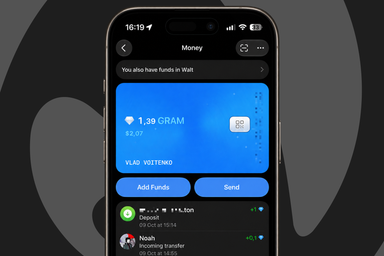
Telegram launches Money, its built-in crypto wallet: Here's how it works

15:05
Telegram Desktop vulnerability allowed attackers to steal files with one click

12:33
Anthropic will ban repeated abuse of Claude under new usage rules
14:26
Australia prepares legal action against social media giants over under-16 ban
13:54
You can reserve Tesla’s new Roadster in the UAE for Dh210,000
12:49
Is AI getting out of control? Kaspersky on the risks that matter
18:26
Telegram launches Money, its built-in crypto wallet: Here's how it works
15:05
Telegram Desktop vulnerability allowed attackers to steal files with one click
12:33
Anthropic will ban repeated abuse of Claude under new usage rules
14:26
Australia prepares legal action against social media giants over under-16 ban
13:54
You can reserve Tesla’s new Roadster in the UAE for Dh210,000
12:49
Is AI getting out of control? Kaspersky on the risks that matter
18:26
Telegram launches Money, its built-in crypto wallet: Here's how it works
15:05
Telegram Desktop vulnerability allowed attackers to steal files with one click
12:33
Anthropic will ban repeated abuse of Claude under new usage rules
14:26
Australia prepares legal action against social media giants over under-16 ban
13:54
You can reserve Tesla’s new Roadster in the UAE for Dh210,000
12:49
Is AI getting out of control? Kaspersky on the risks that matter
18:26
Telegram launches Money, its built-in crypto wallet: Here's how it works
15:05
Telegram Desktop vulnerability allowed attackers to steal files with one click
12:33
Anthropic will ban repeated abuse of Claude under new usage rules

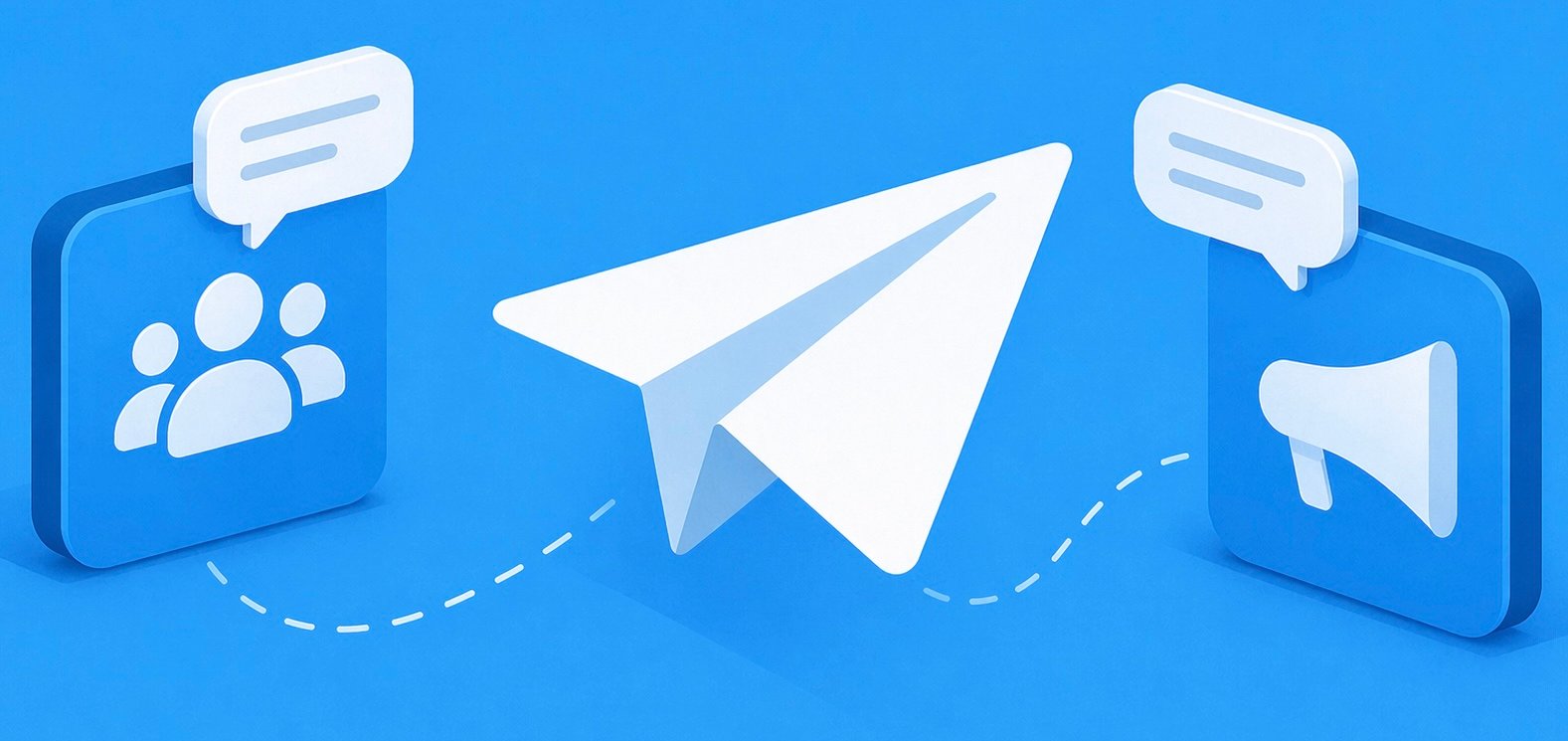
Telegram Channels vs Groups 2026: Key Differences and How to Find Them
Telegram has evolved far beyond its original messenger roots. By 2026, it serves as a comprehensive ecosystem for news distribution, community building, business communication, and content creation. With over a billion active users worldwide, the platform has become essential infrastructure for everything from cryptocurrency trading communities to educational courses.
However, even experienced users face a fundamental challenge: when building a community or audience, should you create a Telegram Channel or a Telegram Group? This decision shapes everything that follows.
Choose incorrectly, and you might spend months managing a chaotic group chat when you needed a clean broadcast tool, or watching a silent channel when you actually wanted vibrant community discussions. The wrong choice costs time, audience, and often money.
We explain the key differences between these formats, when to use each one, and how to find the right communities for your needs in 2026.
Understanding the Core Difference
The fundamental distinction drives everything else:
- Telegram Channel = One-to-many broadcasting (like a newsletter or news feed inside Telegram)
- Telegram Group = Many-to-many conversation space (like a forum or interactive community)
Important to note: these are completely separate entities in Telegram's architecture. You cannot convert a channel into a group or vice versa. The choice you make at the start determines your community's entire structure.
What Is a Telegram Channel?
A Telegram channel functions as a broadcasting platform where only administrators can publish content while subscribers receive and consume it. Think of it as your personal media outlet inside Telegram.
Essential characteristics of channels:
- Unlimited subscribers - Channels have no cap on audience size, allowing infinite scaling as your content reaches more people.
- One-way communication by default - Only channel owners and appointed admins can post messages. Subscribers can read, react with emoji, and view content, but cannot initiate conversations within the channel itself.
- Post view counters - Every message displays exactly how many people have viewed it, providing immediate feedback on content performance.
- Advanced analytics - Channels receive detailed statistics including growth charts, per-post reach metrics, subscriber sources, and engagement patterns over time.
- Silent notifications - Admins can publish posts without triggering push notifications, allowing content distribution during off-hours without disturbing subscribers.
- Public discoverability - Public channels with usernames appear in Telegram's global search results, making them easier to find organically compared to groups.
- Linked discussion capability - Channels can connect to groups where subscribers discuss posts, combining clean content feeds with community interaction.
What Is a Telegram Group?
A Telegram group creates an interactive space where all members can participate in conversations, share content, and build relationships with each other.
Essential characteristics of groups:
- Up to 200,000 members - Groups support massive communities while maintaining interactive functionality for all participants.
- Two-way communication - All members can send messages, reply to others, share media files, and participate in discussions within their permission levels.
- Topics feature - Large groups can organize conversations into separate themed threads (like "General Discussion," "Support," "Announcements") preventing important messages from getting lost in unrelated chatter.
- Advanced moderation tools - Administrators can set granular permissions, enable slow mode to prevent spam, restrict media sharing, delete messages, and manage member behavior effectively.
- Full bot integration - Groups support comprehensive bot functionality for automated moderation, welcome messages, FAQ responses, polls, and community management tasks.
- Member visibility - Participants can see other group members (depending on privacy settings), facilitating networking and relationship building within the community.
- Native threading - Groups feature built-in reply systems and conversation threads, making discussions easy to follow even with many participants.
Feature Comparison Table
The Comment System Mystery - Explained
Many users notice different behaviors when trying to comment on channel posts. Here's what actually happens in each scenario:
- Scenario 1: No comments available - The channel administrator has not enabled any commenting functionality. The channel remains a pure broadcast feed.
- Scenario 2: Comments open in a popup thread - The channel uses Telegram's built-in comment system with a hidden linked group running behind the scenes. Users see a threaded discussion interface, but technically they're participating in a group.
- Scenario 3: Comments open in a separate group - The channel links to a visible, standalone discussion group that members can join independently and use for ongoing conversations.
Important to note: in all cases where comments exist, they technically happen in a group. Telegram simply presents the interface differently based on the administrator's configuration choices.
When to Choose a Channel
Select a channel when your primary goal involves content distribution to a large audience:
Ideal use cases:
- News and media outlets - Delivering timely updates, market analysis, or industry news without conversational noise cluttering the feed.
- Business announcements - Product launches, company updates, feature releases, and official communications that require clear, authoritative messaging.
- Educational content - Structured courses, tutorials, daily tips, and learning materials where the focus should remain on the content itself.
- Personal branding - Expert commentary, thought leadership, and professional content sharing with audiences who primarily want to consume rather than discuss.
- Curated resources - Link collections, tool recommendations, and resource libraries where the value lies in the curation rather than community discussion.
Key advantages:
- Complete editorial control over messaging and tone
- No off-topic discussions diluting your core message
- Unlimited audience growth potential without technical restrictions
- Professional appearance that builds authority and credibility
- Detailed analytics showing exactly which content resonates with your audience
When to Choose a Group
Select a group when interaction and community building are central to your goals:
Ideal use cases:
- Customer support communities - Public Q&A spaces where one answer helps multiple users, and customers can help each other solve common problems.
- Learning communities - Study groups, course cohorts, and skill development circles where peer interaction enhances the learning experience.
- Professional networks - Industry discussions, job boards, and networking opportunities where members benefit from connecting with each other.
- Local communities - City groups, regional meetups, and location-based connections where coordination and relationship-building matter most.
- Hobby and interest groups - Fan communities, gaming groups, and shared interest discussions where the conversation itself provides the primary value.
Key advantages:
- Real-time feedback and direct engagement from your audience
- Network effects where members create value for each other
- Strong community bonds when properly moderated from the beginning
- Direct access to audience insights through questions and discussions
- Organic content generation from active community members
The Power Strategy: Channel + Discussion Group
The most effective approach for serious community builders combines both formats strategically. Telegram makes this seamless through linked discussion groups.
How the hybrid setup works:
- Create your main channel for clean content distribution
- Create a separate group for community discussions and interaction
- Link the group to the channel through the channel's Discussion settings
- Every channel post automatically appears in the group with a "Comments" button for subscriber engagement
Benefits of this dual approach:
Clean content feed - Your channel maintains focus on quality posts without conversational noise or off-topic discussions.
Active community space - The linked group captures all discussions, questions, and interactions around your content.
Multiple engagement levels - Passive consumers can follow just the channel, while active participants join both the channel and discussion group.
Enhanced discoverability - Channels rank higher in Telegram search results, naturally funneling new users toward your broader community ecosystem.
This hybrid model has become the standard approach for successful Telegram communities in 2026, delivering the benefits of both formats without the limitations of either alone.
Migration Reality Check
You cannot convert a group into a channel or vice versa through Telegram's interface. If you started with the wrong format, manual migration becomes necessary - and it comes with significant costs.
Group to Channel migration process:
- Create your new channel with clear branding and purpose
- Announce the transition in your existing group, explaining the reasons and benefits clearly
- Post consistently in the new channel to demonstrate immediate value
- Consider repurposing the original group as a discussion space linked to the new channel
Channel to Group migration process:
- Create the new group with appropriate rules and moderation
- Link it to your existing channel as a discussion group to naturally funnel your current audience
- Actively promote group participation through channel posts and engagement
- Gradually shift focus based on community response and engagement patterns
Realistic expectations: Migrations typically result in losing a significant portion of your audience - often anywhere from 20 to 50 percent depending on how well the transition is communicated and how compelling the new format appears to existing followers. The members who do make the transition are usually your most engaged and loyal supporters, representing the true core of your community.
How to Find Telegram Channels and Groups
Discovering quality communities requires knowing where to look and how to evaluate what you find.
Method 1: Telegram's Built-in Search
Step-by-step discovery process:
- Open Telegram and access the search function at the top of the interface
- Enter keywords related to your interests (examples: "cryptocurrency analysis," "web development," "fitness coaching")
- Review results marked as "Channel" or "Group" in the search interface
- Check subscriber counts, recent activity, and content quality before joining
Distinguishing channels from groups in search results:
- Channels display "X subscribers" with recent posts showing no reply threads
- Groups display "X members" with conversation previews showing multiple participant interactions
Method 2: Telegram Directory Websites
Several specialized platforms index and categorize public Telegram communities:
Popular directory services:
- TGStat - Comprehensive analytics platform with growth metrics and detailed audience data
- Telemetr.io - Analytics-focused directory offering regional filtering and engagement statistics
- TGChannels.org - Curated directory organized by topic with editorial recommendations
- Combot.org - Group-focused directory emphasizing activity metrics and community health indicators
Effective directory usage:
- Filter results by category, language, and minimum subscriber thresholds
- Examine engagement rates and posting frequency patterns before committing
- Read community descriptions carefully to understand actual focus and culture
- Look for verification badges or editorial recommendations where available
Method 3: Cross-Platform Discovery
Primary discovery sources:
- Reddit - Search for "Telegram [your topic]" in relevant subreddits and community discussions
- X (Twitter) - Check bio links of creators, brands, and thought leaders you already follow
- YouTube - Review video descriptions and channel About sections for community links
- Discord servers - Many communities maintain active presence across multiple platforms simultaneously
Method 4: Direct Invitation Links
Private channels and groups use invitation links containing "+" symbols (format: t.me/+randomstring). These typically appear through:
- Website footers and newsletter signatures
- Social media profiles and promotional posts
- Direct recommendations from existing community members
- Paid membership platforms and exclusive community services
Quality Assessment Framework
Before joining any community, evaluate these essential factors:
For Channels:
Content consistency - Look for regular posting schedules that match the stated purpose. News channels may post multiple times daily, while educational content often benefits from a more measured pace. For most general topics, a moderate frequency that provides value without overwhelming subscribers works best.
Content quality - Assess whether posts provide genuine insights, useful information, or entertainment value versus purely promotional material or low-effort reposts.
Engagement health - Examine view counts and reaction rates relative to subscriber numbers. Healthy channels show meaningful engagement from their stated audience size.
Recent activity - Channels inactive for extended periods (typically over a month) often indicate abandoned projects or indefinite hiatuses.
For Groups:
Moderation effectiveness - Check whether spam gets removed promptly, rules are consistently enforced, and discussions remain on-topic and respectful.
Community culture - Assess whether conversations are constructive, welcoming to newcomers, and aligned with the stated group purpose.
Administrative presence - Active administrators who participate in discussions and manage community health indicate better long-term sustainability.
Member engagement - Look for recent messages, ongoing conversations, and evidence that members actively help each other rather than just consuming content passively.
Decision-Making Framework
Use these key questions to guide your format choice:
1) What is your primary objective?
- Information distribution → Channel
- Community building and interaction → Group
- Both goals simultaneously → Channel + Discussion Group hybrid
2) How much two-way interaction do you need?
- Minimal feedback required → Channel only
- High interaction essential → Group or hybrid setup
3) What audience size and behavior do you expect?
- Large numbers of passive content consumers → Channel required
- Smaller group of active participants → Group works effectively
4) What moderation resources are available?
- Limited time or team → Start with channel (easier to manage)
- Dedicated moderation capacity → Group becomes fully manageable
Real-World Success Examples
Cryptocurrency News + Trading Community: A market analysis channel publishes daily technical analysis and news updates while maintaining a linked discussion group where traders share strategies, ask questions about the analysis, and coordinate their activities in real-time.
Online Education Platform: A programming course creator uses a channel for structured lesson delivery, resource sharing, and assignment announcements, with a linked group where students ask questions, share project progress, and collaborate on coding challenges.
SaaS Company Communication: A software company maintains a product updates channel for feature announcements and release notes, linked to a customer support group where users report bugs, request features, and help each other troubleshoot issues.
Industry News Curation: A technology news curator publishes carefully selected articles with brief commentary several times daily. No discussion group is needed since the audience primarily wants the curated feed rather than conversation around each story.
Security and Best Practices
Whether managing communities or participating as a member, maintain these security practices:
Enable Two-Factor Authentication - Set up cloud password protection requiring verification when logging in from new devices. This prevents account hijacking and unauthorized access to your communities.
Regular cache management - Clear Telegram's cache periodically through Settings > Data and Storage > Storage Usage to prevent the app from consuming excessive device storage while preserving your chat history in the cloud.
Privacy settings review - Regularly check who can see your phone number, add you to groups, and forward your messages to maintain appropriate privacy levels.
Conclusion and Key Takeaways
The choice between Telegram channels and groups represents a strategic decision that shapes how your community functions, grows, and delivers value to its members.
Essential principles for success:
- Channels excel at broadcasting, groups excel at conversation - This fundamental distinction should guide every format decision you make.
- The hybrid approach delivers optimal results - Most successful communities in 2026 strategically combine both formats to serve different audience needs and engagement levels.
- Quality moderation is non-negotiable - Especially for groups, invest in proper moderation tools, clear community guidelines, and consistent enforcement from day one.
- Format migration carries real costs - Choose carefully from the start to avoid losing significant portions of your audience during later transitions.
- Discovery requires multi-channel strategy - Use built-in search, specialized directories, cross-platform promotion, and word-of-mouth recommendations to build visibility effectively.
Before creating any community, spend time observing successful channels and groups in your target niche. Study how they structure content, manage discussions, handle growth, and engage their audiences. This research will inform better decisions about format selection, community guidelines, and long-term growth strategies.
The most effective Telegram presence in 2026 combines clean, valuable content distribution through channels with meaningful community engagement through groups - giving your audience both the information they seek and the connections they value.







Editor’s pick