17:40
Google launches Playground to turn text prompts into playable games

13:09
OpenAI releases 722 AI math papers amid criticism from mathematicians

12:32
EU looks to collect more tax from Apple, Meta and Google

10:55
What’s new in Nano Banana 2.1 and how much it costs

19:18
Mistral launches Large 4 to take on closed and open AI rivals

18:10
Hackers used the ASOS app to send customers a ransom demand
17:40
Google launches Playground to turn text prompts into playable games
13:09
OpenAI releases 722 AI math papers amid criticism from mathematicians
12:32
EU looks to collect more tax from Apple, Meta and Google
10:55
What’s new in Nano Banana 2.1 and how much it costs
19:18
Mistral launches Large 4 to take on closed and open AI rivals
18:10
Hackers used the ASOS app to send customers a ransom demand
17:40
Google launches Playground to turn text prompts into playable games
13:09
OpenAI releases 722 AI math papers amid criticism from mathematicians
12:32
EU looks to collect more tax from Apple, Meta and Google
10:55
What’s new in Nano Banana 2.1 and how much it costs
19:18
Mistral launches Large 4 to take on closed and open AI rivals
18:10
Hackers used the ASOS app to send customers a ransom demand
17:40
Google launches Playground to turn text prompts into playable games
13:09
OpenAI releases 722 AI math papers amid criticism from mathematicians
12:32
EU looks to collect more tax from Apple, Meta and Google
10:55
What’s new in Nano Banana 2.1 and how much it costs
19:18
Mistral launches Large 4 to take on closed and open AI rivals
18:10
Hackers used the ASOS app to send customers a ransom demand

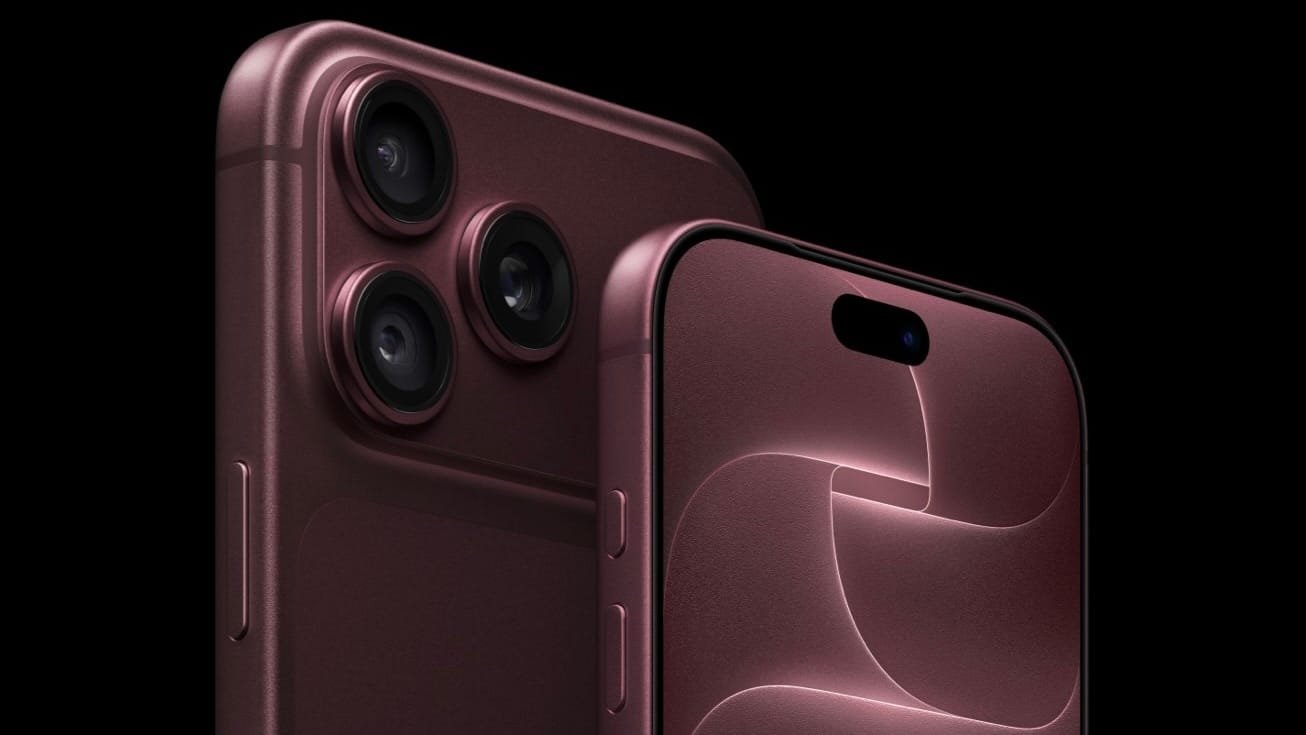
The iPhone 18 Pro looks much like its predecessor, but Apple has made several changes inside, from a variable-aperture main camera and the new A20 Pro chip to redesigned cooling, faster charging and longer rated battery life.
We compared the iPhone 18 Pro with the iPhone 17 Pro to see how significant those changes actually are, what remains the same, and who has the most reason to upgrade to the new model.
iPhone 18 Pro vs iPhone 17 Pro at a glance
| iPhone 18 Pro | iPhone 17 Pro | |
|---|---|---|
| Main camera | Variable f/1.48 to f/4 aperture | Fixed f/1.78 aperture |
| Chip | A20 Pro | A19 Pro |
| Video playback (US model) | Up to 36 hours | Up to 33 hours |
| Weight | 211 grams | 206 grams |
| US launch price | From $1,199 | From $1,099 |
The table covers the headline specifications. Below, we take a closer look at the changes and how the two generations compare.
The main camera gets a variable aperture
The iPhone 18 Pro introduces a new 48MP Fusion Main camera with a variable aperture. The iPhone 17 Pro uses a fixed f/1.78 aperture, while the iPhone 18 Pro uses six moving blades to switch between four settings:
- f/1.48
- f/1.8
- f/2.8
- f/4
Aperture controls how much light reaches the sensor and affects depth of field. A wider setting such as f/1.48 lets in more light, while f/4 can keep more of the scene in focus, which can be useful for group photos, landscapes and architecture.
The iPhone can choose the aperture automatically, but users can also adjust it manually in the Camera app. Apple has added controls for shutter speed and white balance, an exposure histogram and customizable camera controls. Third-party camera apps can also control the aperture through Apple’s API.
For users who leave the camera in automatic mode, shooting works much as before. The difference is that the main camera can now physically adjust its aperture. Manual controls give photographers more options for handling low light, depth of field and movement.
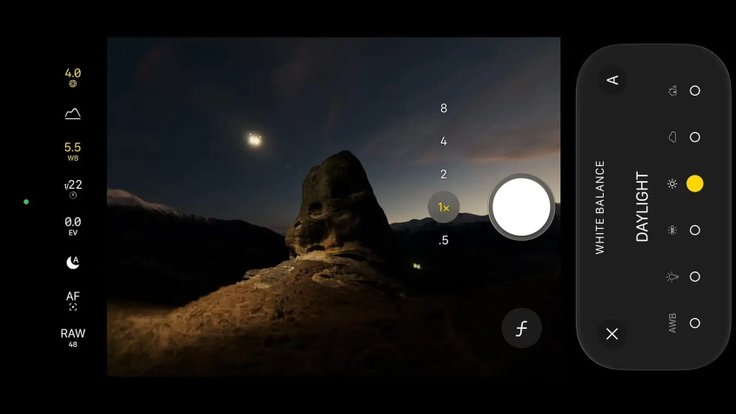
Apple has also changed the main sensor and updated its image-processing pipeline. The company says this improves low-light photography and detail, although independent tests will show how much of a difference it makes compared with the iPhone 17 Pro. Photographic Styles also get texture and grain controls, and the camera can track moving subjects.
What else changed for photos and video
The iPhone 18 Pro adds Apple Reference Image, a feature for verifying what the camera originally captured. In Reference mode, the camera sensor cryptographically signs pixel data at capture, which can later be used to create a protected reference image and compare it with an edited version.
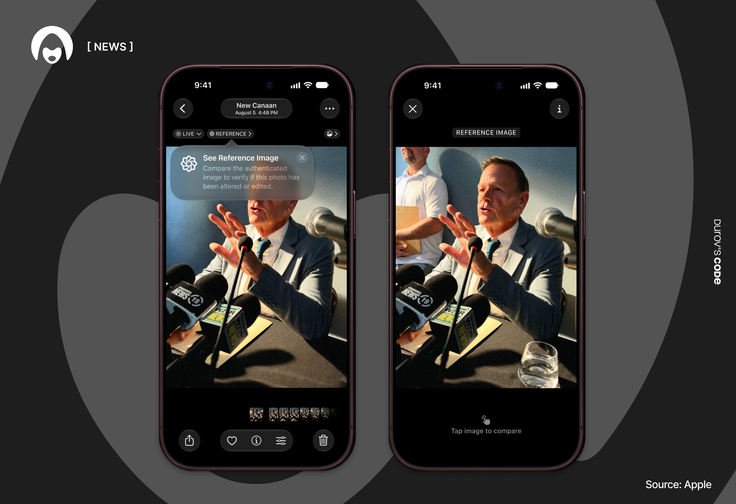
The feature is fairly specialized, but it could be useful for photographers, photojournalists and publishers working with images that need to be authenticated.
Video gets several smaller changes:
- Cinematic mode now supports up to 4K Dolby Vision at 60 fps, up from 30 fps on the iPhone 17 Pro.
- Cinematic effects can be applied after recording.
- Stabilized time-lapse supports 4K Dolby Vision.
- Audio Mix can isolate music from other sounds.
- Apple says low-light video has been improved.
The rest of the rear camera hardware is similar. Both phones have a 48MP ultra-wide camera and a 48MP telephoto camera with 4x native magnification and an 8x optical-quality option. The iPhone 18 Pro does not extend the telephoto reach of the iPhone 17 Pro.
A20 Pro and redesigned cooling
The iPhone 18 Pro runs on the A20 Pro, Apple’s first iPhone chip made using a 2-nanometer process. It has a six-core CPU, a seven-core GPU instead of the six-core GPU in A19 Pro, a dual 16-core Neural Engine and 50% more memory bandwidth. Apple claims up to 40% faster graphics and twice the AI processing power of A19 Pro.
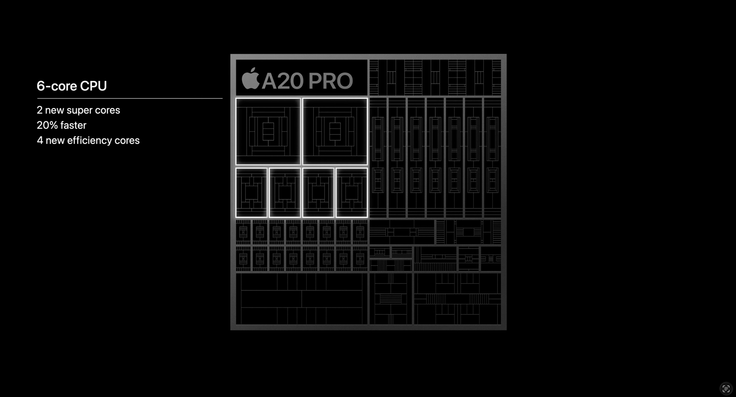
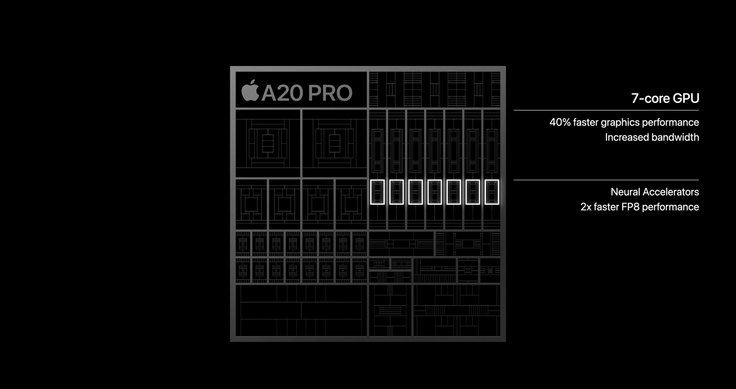
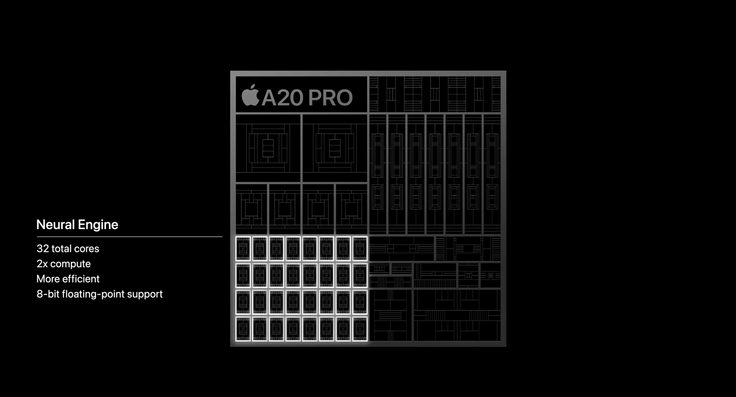
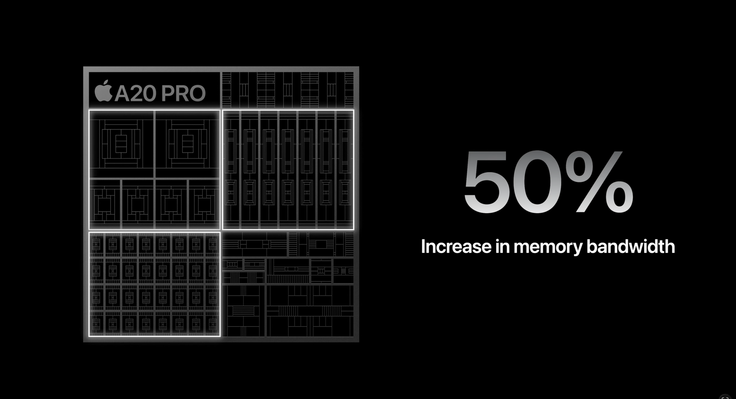
Those figures apply to specific workloads rather than overall phone speed. Everyday tasks such as messaging, web browsing and social media are unlikely to show the same gains. The difference should be more apparent in demanding games, video editing, computational photography and AI models running on the device.
Apple introduced vapor-chamber cooling with the iPhone 17 Pro, but the iPhone 18 Pro gets a redesigned version with new materials and three times the surface area. Apple has also changed the internal arrangement of the chip, placing the processor and memory next to each other so the A20 Pro can connect more directly to the vapor chamber.
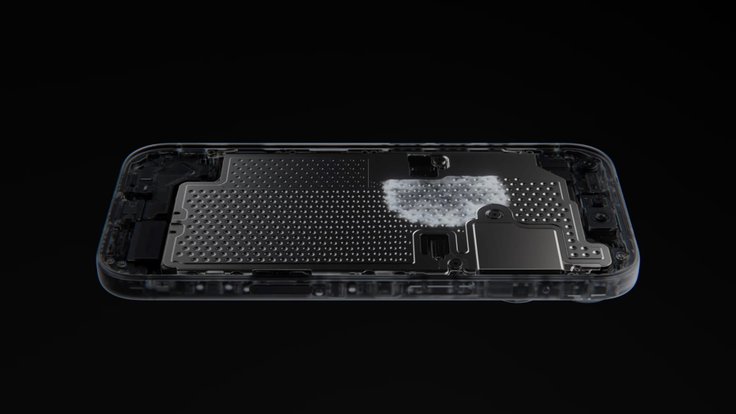
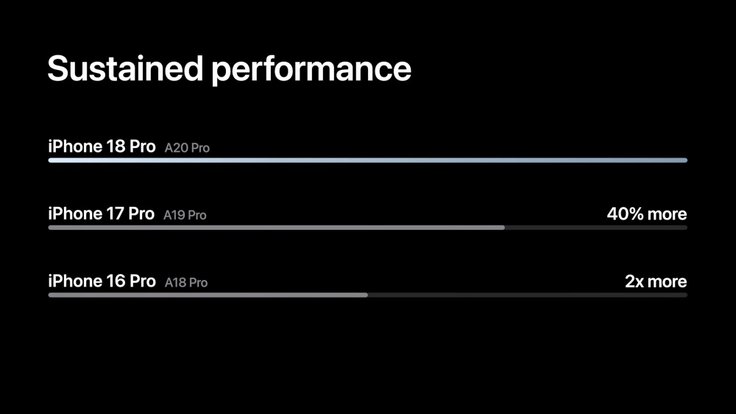
Apple claims up to 40% better sustained performance than the iPhone 17 Pro. This is mainly relevant during longer workloads such as gaming, video exports and local AI processing rather than short tasks or ordinary app use.
Apple moves to the C2 modem
The iPhone 18 Pro also uses Apple’s new C2 cellular modem. Apple says it offers faster uploads and 15% lower energy consumption than C1X, along with AI-assisted improvements to connection quality and reliability. It supports sub-6GHz and mmWave 5G in the US.
There is an important limitation to that comparison: Apple compares C2 with C1X, not directly with the modem inside the iPhone 17 Pro. The company does not identify the 17 Pro modem in its official specifications. The 15% figure therefore should not be read as a 15% reduction in cellular power consumption compared with the iPhone 17 Pro.
Modem configurations also vary by model and market. Apple lists C2 for the US iPhone 18 Pro but not for the US iPhone 18 Pro Max, and specifications differ in other regions.
Battery life increases
Apple rates the US iPhone 18 Pro for up to 36 hours of video playback, compared with 33 hours for the iPhone 17 Pro. Streaming video increases from up to 30 hours to 33 hours.
The increase is larger on the Pro Max. The US iPhone 18 Pro Max is rated for up to 45 hours of video playback, compared with 39 hours for the previous Pro Max. It also has nine more hours of rated video playback than the smaller iPhone 18 Pro.
Wired charging gets faster
The iPhone 18 Pro can charge from zero to around 50% in 15 minutes. Apple rated the iPhone 17 Pro for around 20 minutes.
The new speed requires a 60W-capable or higher adapter with Adjustable Voltage Supply support. A charger rated at 65W or 100W may still charge more slowly if it does not support the required power profile.
MagSafe remains at up to 25W, with a 50% wireless charge taking around 30 minutes. Apple now recommends a 35W adapter, compared with the 30W adapter specified for the iPhone 17 Pro.
The dimensions stay the same
Apple has kept the same basic body dimensions. The iPhone 18 Pro measures 150 mm tall, 71.9 mm wide and 8.75 mm thick, matching the iPhone 17 Pro. It is slightly heavier at 211 grams, compared with 206 grams.
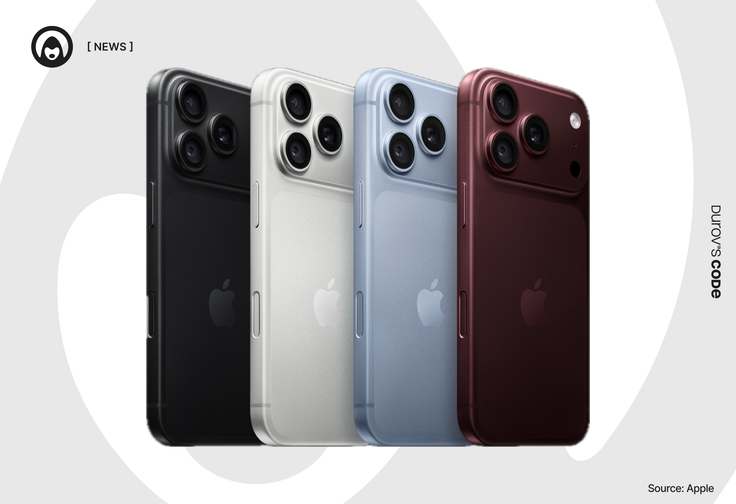
The more visible change is the smaller Dynamic Island, which can display up to three Live Activities at once. Apple has also changed the color lineup: the iPhone 18 Pro comes in black, silver, glacier and burgundy, replacing silver, deep blue and cosmic orange.
The smaller Pro also gets a new 2TB storage option. The iPhone 17 Pro topped out at 1TB, with 2TB previously available only on the Pro Max. The extra capacity is mainly relevant to users who record large amounts of ProRes video or keep other large files on the phone.
What stayed the same
Many of the specifications are unchanged:
- 6.3-inch Super Retina XDR OLED display, 2622 × 1206 resolution
- ProMotion refresh rate up to 120Hz, Always-On display
- up to 3,000 nits of outdoor brightness
- aluminum unibody, Ceramic Shield 2, IP68 water and dust resistance
- 18MP Center Stage front camera
- Camera Control and Action Button
- USB 3 transfers at up to 10Gbps and MagSafe and Qi2 charging at up to 25W
The screen is the same size and resolution, the buttons remain in the same places, and the phone has the same overall dimensions. For someone moving directly from an iPhone 17 Pro, much of the hardware will therefore be familiar.
The iPhone 18 Pro costs $100 more
The iPhone 18 Pro starts at $1,199 in the US with 256GB of storage. The iPhone 17 Pro launched at $1,099 with the same capacity. The iPhone 18 Pro Max starts at $1,299, also $100 above the launch price of its predecessor.
Apple’s US prices exclude sales tax. The actual price difference will now depend on remaining iPhone 17 Pro stock, retailer discounts, carrier offers and refurbished availability.
Should you upgrade to the iPhone 18 Pro?
If you already have an iPhone 17 Pro, this is a fairly modest year-to-year upgrade. The variable-aperture camera gives photographers more control, and the new cooling system should matter under sustained workloads, but most everyday use will feel familiar. Unless either of those changes solves a specific problem for you, there is little reason to replace a 17 Pro after one year.
The calculation changes with older models. Moving from an iPhone 15 Pro or earlier brings enough changes across several generations to make the iPhone 18 Pro a more meaningful upgrade. The iPhone 16 Pro is less clear-cut: there are improvements, but not many that fundamentally change how the phone works.
For anyone buying a Pro iPhone today, price may be just as important as generation. A discounted iPhone 17 Pro still offers much of the same everyday experience, so it is worth comparing current prices before paying more for the new model. And if battery life matters more than size, the Pro Max has a clearer advantage this year: Apple rates it for nine more hours of video playback than the smaller Pro, with the same rear camera system.






Editor’s pick