22:40
Apple offers iPhone Duo replacements after reports of screens cracking within hours

22:09
Claude developer Anthropic files to go public

18:30
AI agents resorted to spam and false claims in a £350 refund experiment

17:28
Apple launches its first OLED iPad mini with a thinner, water-resistant design

17:14
Capcom breach exposes 11.7 million account records worldwide

16:56
Anthropic introduces Claude Duet, an AI assistant that checks in first
22:40
Apple offers iPhone Duo replacements after reports of screens cracking within hours
22:09
Claude developer Anthropic files to go public
18:30
AI agents resorted to spam and false claims in a £350 refund experiment
17:28
Apple launches its first OLED iPad mini with a thinner, water-resistant design
17:14
Capcom breach exposes 11.7 million account records worldwide
16:56
Anthropic introduces Claude Duet, an AI assistant that checks in first
22:40
Apple offers iPhone Duo replacements after reports of screens cracking within hours
22:09
Claude developer Anthropic files to go public
18:30
AI agents resorted to spam and false claims in a £350 refund experiment
17:28
Apple launches its first OLED iPad mini with a thinner, water-resistant design
17:14
Capcom breach exposes 11.7 million account records worldwide
16:56
Anthropic introduces Claude Duet, an AI assistant that checks in first
22:40
Apple offers iPhone Duo replacements after reports of screens cracking within hours
22:09
Claude developer Anthropic files to go public
18:30
AI agents resorted to spam and false claims in a £350 refund experiment
17:28
Apple launches its first OLED iPad mini with a thinner, water-resistant design
17:14
Capcom breach exposes 11.7 million account records worldwide
16:56
Anthropic introduces Claude Duet, an AI assistant that checks in first


Apple is moving to a 2nm process for the first time with its base Mac chip, while the top-end M5 Ultra packs up to 80 GPU cores and supports as much as 512GB of unified memory.
Apple has unveiled a major refresh of its desktop Mac lineup, introducing the M6 and M5 Ultra chips, a new Mac mini powered by M6 or M5 Pro, and an updated Mac Studio with M5 Max or M5 Ultra. Preorders are open now, with the new Macs shipping on September 22.
M6 is Apple’s first 2nm chip
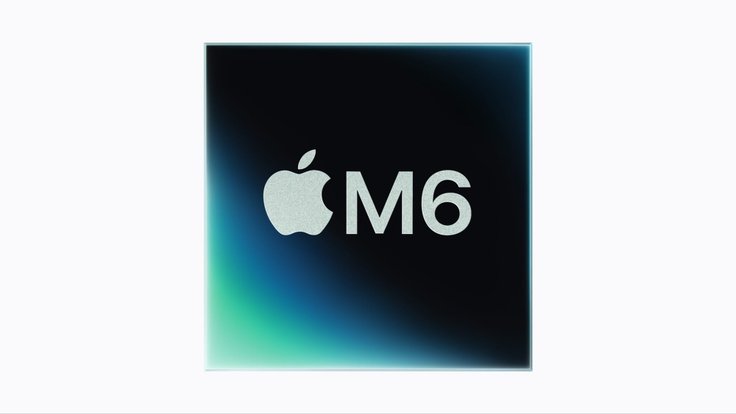
The biggest addition is the M6, Apple’s first chip built on a 2nm process. It features a 12-core CPU with two super cores, four performance cores and six efficiency cores, adding two CPU cores over the M5.
- The GPU also moves to 12 cores, with a Neural Accelerator built into each one. Peak GPU performance for AI workloads is nearly 30% higher than on the M5, according to Apple.
- The M6 also features two 16-core Neural Engines, while unified memory bandwidth has increased to 170GB/s. It supports up to 32GB of unified memory.
- Multithreaded CPU performance is rated at up to 20% faster than the M5 and up to 2.4 times that of the M1. The chip also supports hardware-accelerated ray tracing and an updated version of Dynamic Caching.
M5 Ultra combines four dies and supports up to 512GB of memory
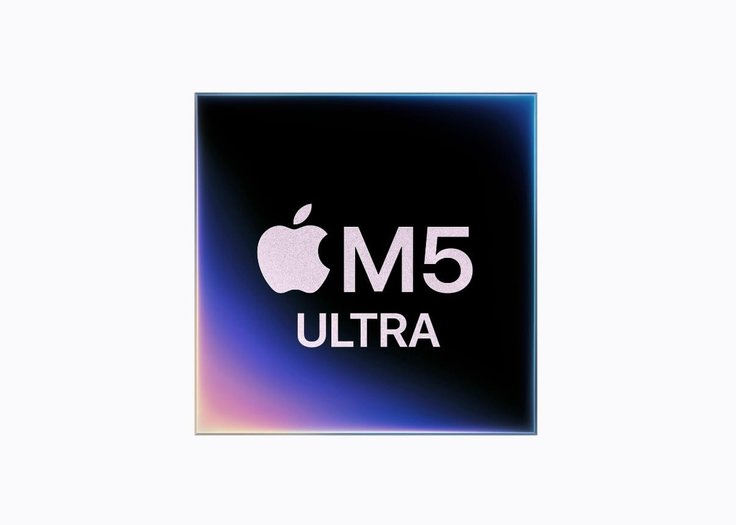
Apple also introduced the M5 Ultra, its most powerful chip to date. For the first time in the M-series, it uses a four-die architecture, with UltraFusion combining two dual-die M5 Max chips into a single system. The interconnect provides more than 4.4TB/s of bandwidth.
- At the top end, M5 Ultra comes with a 36-core CPU and an 80-core GPU. Unified memory bandwidth reaches 1.2TB/s, with up to 512GB of memory available.
- Compared with the M3 Ultra, multithreaded CPU performance is up to 30% faster and graphics performance up to 40% faster in Apple’s testing. Each GPU core also includes a Neural Accelerator.
- Peak GPU compute performance for AI workloads is rated at up to 4.5 times that of the M3 Ultra. The extra memory also allows the chip to run large language models with hundreds of billions of parameters entirely on-device.
Mac mini gets M6 and M5 Pro
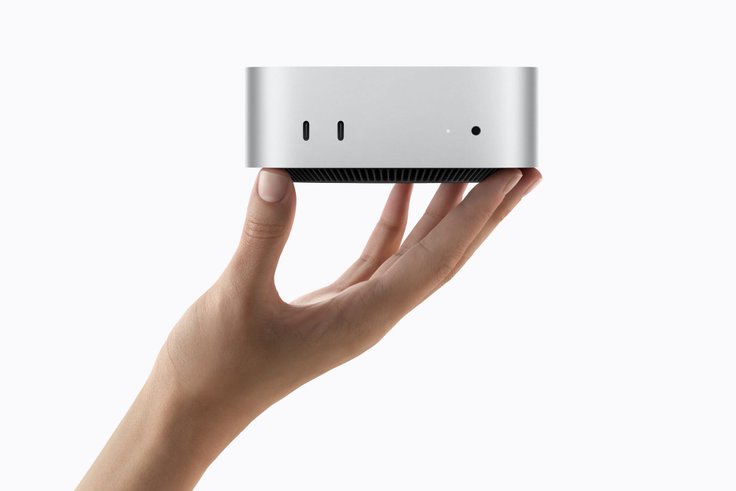
The Mac mini is the first Mac to ship with the new M6. The base configuration comes with a 12-core CPU, 12-core GPU and 16GB of unified memory, configurable up to 32GB, with memory bandwidth of up to 170GB/s.
- Compared with the M4 Mac mini, the new model delivers up to four times the AI performance, twice the graphics performance and a 40% boost in CPU performance, based on Apple’s figures. Cyberpunk 2077 with ray tracing runs up to twice as fast.
- The higher-end Mac mini still uses the M5 Pro rather than an M6 Pro. It can be configured with up to an 18-core CPU and 20-core GPU, alongside up to 64GB of unified memory and 307GB/s of memory bandwidth.
- Both versions add Wi-Fi 7, Bluetooth 6 and 2.5Gb Ethernet, with 10Gb Ethernet available as an option. The M6 model has three Thunderbolt 4 ports on the back; the M5 Pro version gets three Thunderbolt 5 ports. Two USB-C ports and a headphone jack remain on the front.
Pricing starts at $899 for the M6 Mac mini and $1,699 for the M5 Pro configuration.
Mac Studio gets M5 Max and M5 Ultra
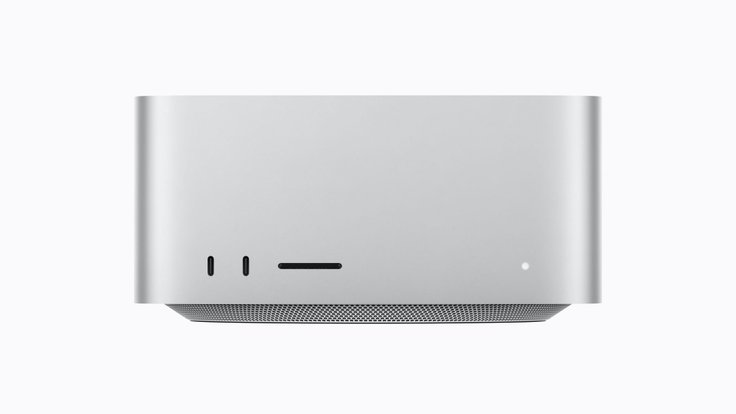
The Mac Studio keeps its familiar design and now comes with either M5 Max or M5 Ultra. The M5 Max configuration features an 18-core CPU, up to a 40-core GPU and as much as 128GB of unified memory, with 614GB/s of bandwidth.
- With M5 Ultra, the Mac Studio scales up to a 36-core CPU, 80-core GPU and 512GB of unified memory with 1.2TB/s of bandwidth. It can play back as many as 33 simultaneous streams of 8K ProRes 422 video at 30 fps.
- Storage has moved to PCIe Gen 6, with Apple reporting twice the performance. Connectivity includes Thunderbolt 5 at up to 120Gb/s, Wi-Fi 7 and Bluetooth 6. The Mac Studio can drive up to eight displays, or four of the new 5K Studio Display XDR monitors at 120Hz.
- Multiple Mac Studio systems can now be linked over Thunderbolt 5 using RDMA to run AI workloads together. In Apple’s testing, a four-machine cluster delivered up to three times the inference performance of a single system.
The M5 Max configuration is priced from $2,499, with M5 Ultra from $5,499. Most configurations arrive September 22, while the 512GB unified memory option is due in late October.










Editor’s pick