22:40
Apple offers iPhone Duo replacements after reports of screens cracking within hours

22:09
Claude developer Anthropic files to go public

18:30
AI agents resorted to spam and false claims in a £350 refund experiment

17:28
Apple launches its first OLED iPad mini with a thinner, water-resistant design

17:14
Capcom breach exposes 11.7 million account records worldwide

16:56
Anthropic introduces Claude Duet, an AI assistant that checks in first
22:40
Apple offers iPhone Duo replacements after reports of screens cracking within hours
22:09
Claude developer Anthropic files to go public
18:30
AI agents resorted to spam and false claims in a £350 refund experiment
17:28
Apple launches its first OLED iPad mini with a thinner, water-resistant design
17:14
Capcom breach exposes 11.7 million account records worldwide
16:56
Anthropic introduces Claude Duet, an AI assistant that checks in first
22:40
Apple offers iPhone Duo replacements after reports of screens cracking within hours
22:09
Claude developer Anthropic files to go public
18:30
AI agents resorted to spam and false claims in a £350 refund experiment
17:28
Apple launches its first OLED iPad mini with a thinner, water-resistant design
17:14
Capcom breach exposes 11.7 million account records worldwide
16:56
Anthropic introduces Claude Duet, an AI assistant that checks in first
22:40
Apple offers iPhone Duo replacements after reports of screens cracking within hours
22:09
Claude developer Anthropic files to go public
18:30
AI agents resorted to spam and false claims in a £350 refund experiment
17:28
Apple launches its first OLED iPad mini with a thinner, water-resistant design
17:14
Capcom breach exposes 11.7 million account records worldwide
16:56
Anthropic introduces Claude Duet, an AI assistant that checks in first

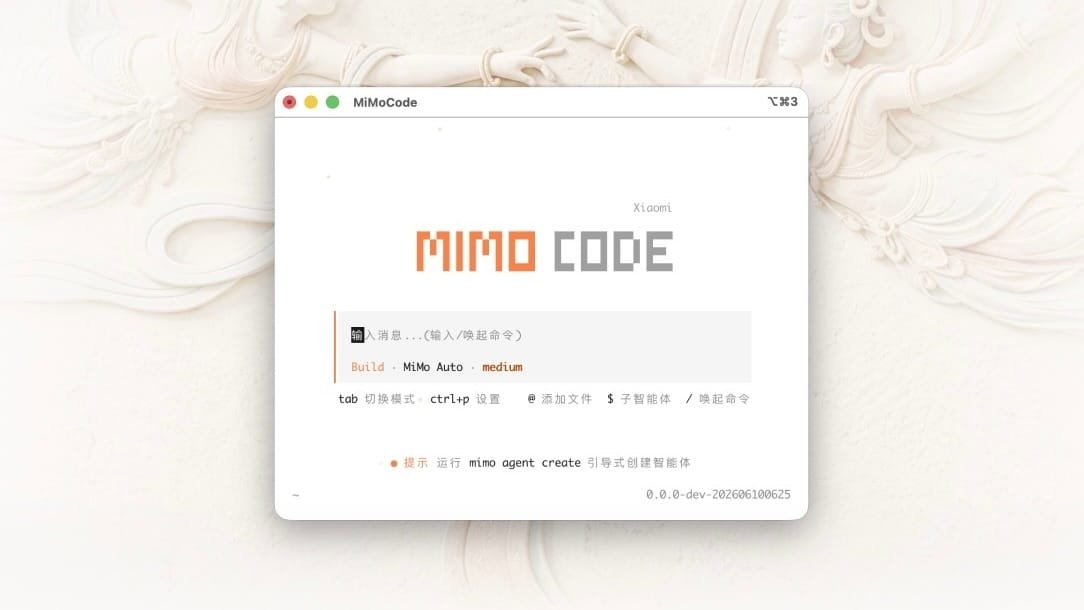
Xiaomi has unveiled MiMo Code, an AI coding agent that runs directly in the terminal and is capable of carrying out multi-step development tasks on its own. The agent can read a repository, write and edit code, run tests, and loop through the process until the task is complete.
The tool is built on top of the open-source OpenCode project, distributed under the permissive MIT license that allows for commercial use, and runs on Xiaomi's own multimodal MiMo-V2.5 model, which is also free.
One of MiMo Code's most notable features is its persistent memory system. A dedicated sub-agent keeps notes and tracks progress on each task, helping the main agent maintain context across long sessions without losing track of what it has already done. Installation takes a single command in the terminal, and users can also redirect computation to their own servers rather than relying on Xiaomi's cloud. At launch, Xiaomi has opened free access to its models, although the company says this is only "for a limited time."
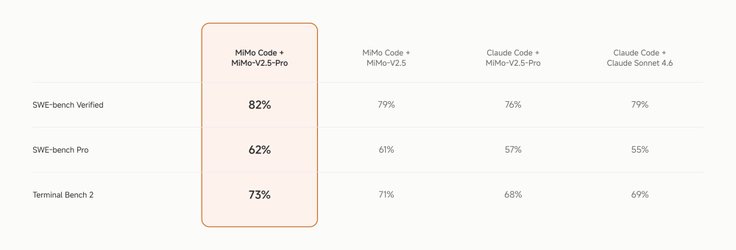
According to Xiaomi's own benchmarks, MiMo Code edges ahead of Anthropic's Claude Code when both run on comparable models. The company reports a score of 62% against Claude's 57% on SWE-Bench Pro, and 73% against 68% on Terminal-Bench 2, a margin of roughly five percentage points in both tests. Xiaomi has placed particular emphasis on the model's ability to handle very long, multi-step tasks that span hundreds of consecutive actions. As with most launch announcements of this kind, the figures come from Xiaomi itself, with no independent public verification of the direct comparison available yet.
Independent evaluations of the underlying MiMo-V2.5 model paint a more measured picture. Third-party rankings describe it as a strong option in the open-model category, but not yet at the level of top closed systems like Claude Opus or GPT-5. MiMo's real strengths lie elsewhere. The model consumes noticeably fewer tokens per task, which makes it more cost-efficient, and its open license gives developers and companies far more freedom to build on it than the closed alternatives.










Editor’s pick