17:14
Capcom breach exposes 11.7 million account records worldwide

16:56
Anthropic introduces Claude Duet, an AI assistant that checks in first

16:32
Hugging Face’s new AI lets scientists chat with DNA

19:26
Government websites across Europe go offline over critical PHP flaws

17:37
Agile Robots unveils Nvidia-powered humanoid built to learn new skills

13:30
PHP warns website owners to prepare for emergency security updates
17:14
Capcom breach exposes 11.7 million account records worldwide
16:56
Anthropic introduces Claude Duet, an AI assistant that checks in first
16:32
Hugging Face’s new AI lets scientists chat with DNA
19:26
Government websites across Europe go offline over critical PHP flaws
17:37
Agile Robots unveils Nvidia-powered humanoid built to learn new skills
13:30
PHP warns website owners to prepare for emergency security updates
17:14
Capcom breach exposes 11.7 million account records worldwide
16:56
Anthropic introduces Claude Duet, an AI assistant that checks in first
16:32
Hugging Face’s new AI lets scientists chat with DNA
19:26
Government websites across Europe go offline over critical PHP flaws
17:37
Agile Robots unveils Nvidia-powered humanoid built to learn new skills
13:30
PHP warns website owners to prepare for emergency security updates
17:14
Capcom breach exposes 11.7 million account records worldwide
16:56
Anthropic introduces Claude Duet, an AI assistant that checks in first
16:32
Hugging Face’s new AI lets scientists chat with DNA
19:26
Government websites across Europe go offline over critical PHP flaws
17:37
Agile Robots unveils Nvidia-powered humanoid built to learn new skills
13:30
PHP warns website owners to prepare for emergency security updates


Telegram Desktop is working on a new WEB Proxy to disguise traffic as regular web browsing
Telegram appears to be developing a new proxy system for its desktop app that could make its traffic much harder to identify and block. Dubbed WEB Proxy, the system routes standard MTProxy traffic through a web-based transport using Telegram Desktop’s built-in WebView.
The feature was spotted in the app’s code by teleLakel, a Telegram channel that tracks changes across Telegram clients. The implementation suggests that Telegram Desktop would open a dedicated page on an HTTPS domain inside WebView and establish a secure WebSocket connection, avoiding a direct connection to the proxy server.
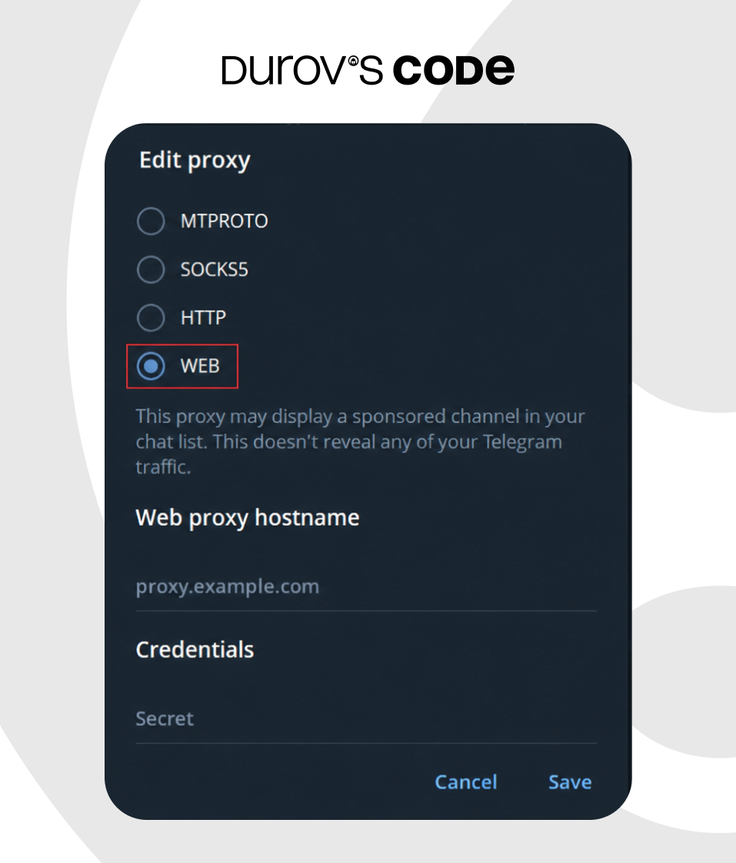
With a standard MTProxy, Telegram connects to the proxy server directly, which then forwards the encrypted traffic to the messenger’s servers. The proxy cannot decrypt private messages, but an internet provider can still see the connection to a specific server and may identify Telegram traffic from its network patterns. WEB Proxy is designed to make that harder by carrying MTProxy traffic over a connection that looks like ordinary web browsing.
- Telegram Desktop wraps MTProxy traffic in an HTTPS/WebSocket transport and sends multiple logical Telegram connections over a single multiplexed stream through WebView.
- The new transport has its own framing system built around OPEN, DATA, WINDOW and CLOSE messages. On the server side, a dedicated relay splits the stream back into individual connections and passes them on to a regular MTProxy server.
- The relay never decrypts the underlying MTProxy traffic and does not receive arbitrary destination addresses from the client.
- WEB Proxy can run on a standard HTTPS domain that also hosts a regular website. A dedicated bridge page is only exposed after the client passes a check specified in the proxy configuration.
This makes the connection look like regular web traffic to internet providers and therefore harder to identify and block. In practice, Telegram is building another way to connect to its network while keeping standard MTProxy traffic underneath.
For now, WEB Proxy exists only in the Telegram Desktop codebase. There is no indication yet of when the feature might become available to users.









Editor’s pick