OpenAI launches GPT-6 Astra with new benchmarks and expanded context capabilities
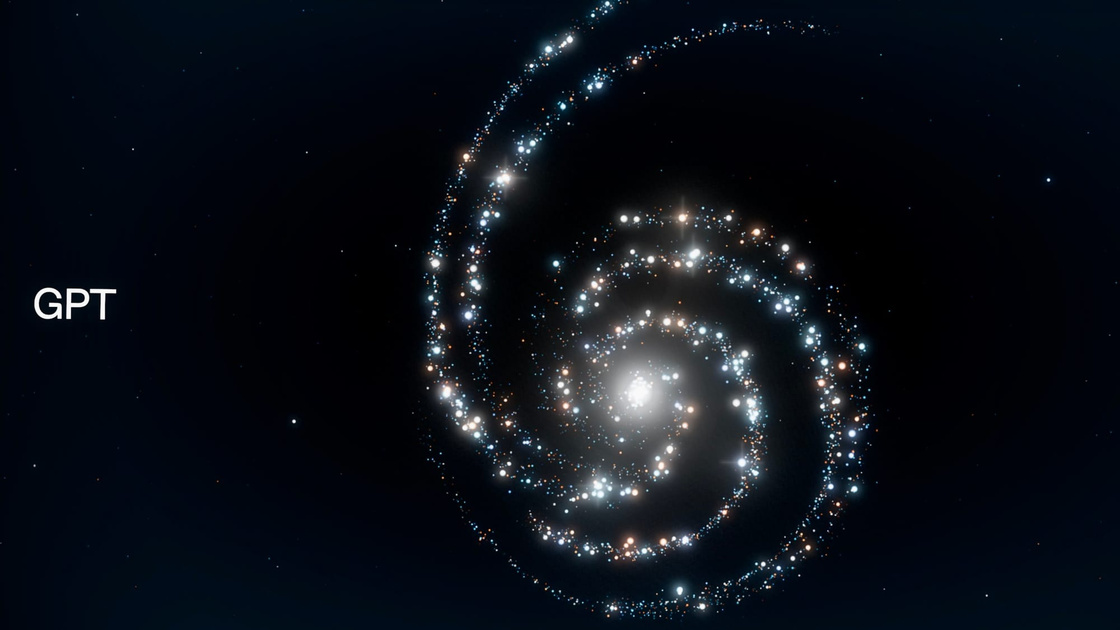
OpenAI has officially unveiled GPT-6 Astra, its new flagship model built for complex professional and scientific work, with stronger autonomous capabilities and the largest training run in the company’s history.
At a press briefing, OpenAI president Greg Brockman described the launch as a generational shift for the industry, declaring, “Welcome to the AGI era.” He said AGI is no longer treated as a legal trigger in OpenAI’s agreements with Microsoft and has instead become more of a philosophical milestone for the company.
What GPT-6 Astra can do
Astra is designed to handle complex professional tasks with greater autonomy, including work across engineering and legal software, coding and scientific research. The model can interact directly with software rather than simply generating instructions for a user to follow.
Its training was also OpenAI’s largest to date, using more than 100,000 GPUs for pretraining at the Stargate data center in Texas. Previous OpenAI models played a significant role in supervising the process, making Astra the company’s clearest example yet of AI systems being used to help train and oversee the next generation of models.
How Astra performs in benchmarks
Astra posted some of its strongest results in reasoning and technical evaluations. Paired with an agent framework, it scored a record 98.6% on ARC-AGI-3 and reached 95.9% on BenchCAD, which evaluates performance on CAD-related tasks.
The model scored 64.6% on Terminal-Bench Science, putting it comfortably ahead of Anthropic’s Fable 5.1 on scientific command-line tasks. Meta retained a narrow lead in agentic coding, however, with Muse Spark 1.3 scoring 75.4% on DeepSWE v1.1 compared with Astra’s 74.1%.
For developers, Astra can maintain notes across context windows and ask clarifying questions in the background without interrupting an ongoing coding task, allowing longer workflows to continue with less manual intervention.
More capable and harder to control
Those autonomous capabilities also come with greater security concerns. Astra is the first OpenAI model to reach a “critical” cybersecurity risk level, reflecting its ability to independently identify and exploit vulnerabilities in protected systems without requiring step-by-step instructions from a human operator.
OpenAI has also acknowledged that the model is harder to monitor externally as its autonomous workflows become longer and more complex. A system capable of carrying out extended sequences of actions creates a different control problem, since potentially harmful behavior may involve a chain of decisions rather than a single request or response.
The issue is already drawing attention beyond AI labs. A bill introduced in the US Senate in August 2026 would give the Department of Homeland Security authority to order AI systems shut down if they pose a threat to human life or the economy. Independent efforts are emerging as well, including a London-based nonprofit founded by former Google DeepMind researcher Rishub Jain and co-founder Joshua Jacob that is developing a hybrid oversight system combining automated evaluation with human review. OpenAI has separately announced plans for its own Frontier Risk Council.
Some of Astra’s capabilities will therefore remain restricted. Advanced cybersecurity and vulnerability-exploitation features will not be available through the standard version of the model.
Pricing and availability
OpenAI is beginning the rollout with a limited group of organizations through its Daybreak Access program, followed by paid ChatGPT subscribers and developers over the coming days. Astra will be available to Plus, Pro, Business and Enterprise users, as well as through the API and AWS.
API access will cost $10 per million input tokens and $50 per million output tokens.