iPhone Duo compared: where Apple beats rival foldables — and where it falls short
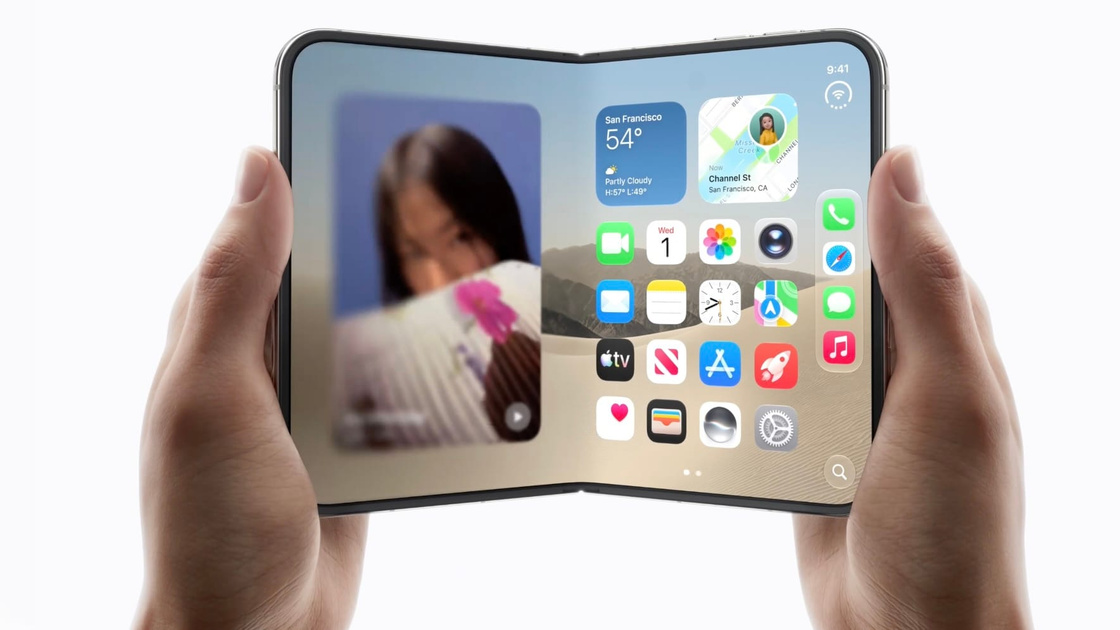
Apple is entering the wide-format foldable market later than its biggest rivals, and that gives the iPhone Duo a tougher job than simply being the first foldable iPhone.
Huawei launched the Pura X Max in April, Samsung followed with the Galaxy Z Fold 8 in July, and Xiaomi introduced the 18 Fold in China shortly before Apple’s event. By the time the Duo arrives, the category is already mature enough that every major rival has a clear answer to at least some of Apple’s strengths.
We compared the iPhone Duo with its closest competitors using official specifications. Here is where Apple has an advantage — and where the hardware still falls short.
Durability: Apple takes the lead
The iPhone Duo carries an IP68 rating, allowing it to withstand submersion in up to 6 meters of water for as long as 30 minutes — the same standard Apple quotes for the iPhone 18 Pro.
None of the competing foldables matches that combination of water and dust protection. Samsung rates the Galaxy Z Fold 8 at IP48, which protects against solid objects larger than 1 mm but does not provide full dust protection. Huawei lists the Pura X Max at IP58 and IP59, covering immersion to 3 meters as well as high-pressure, high-temperature water jets. Xiaomi’s 18 Fold is rated IP58 and tested for immersion to 1.5 meters.
The Duo also uses more premium materials. Its frame is made from Grade 5 titanium, the hinge cover is 3D-printed from recycled titanium, and the outer display uses Ceramic Shield 2. Its main rivals rely on aluminum frames and different display-protection systems.
Displays: sharper, but not brighter
Apple has the highest pixel density of the group on both the inner and outer displays.
Inner displays
Smartphone | Resolution | Size | PPI |
iPhone Duo | 1878 × 2670 | 7.58″ | 430 |
Huawei Pura X Max | 2584 × 1828 | 7.7″ | 411 |
Samsung Galaxy Z Fold 8 | 1848 × 2448 | 7.6″ | 404 |
Xiaomi 18 Fold | 2364 × 1672 | 7.58″ | 382 |
The gap is even wider on the cover screens.
Outer displays
Smartphone | Resolution | Size | PPI |
iPhone Duo | 1398 × 2034 | 5.36″ | 460 |
Huawei Pura X Max | 1848 × 1264 | 5.4″ | 415 |
Samsung Galaxy Z Fold 8 | 1972 × 1248 | 5.5″ | 424 |
Xiaomi 18 Fold | 1712 × 1168 | 5.38″ | 385 |
Apple also applies a nano-texture finish to the Duo’s inner display, similar to the matte option offered on the iPad Pro. It is designed to cut reflections and make the crease less noticeable.
Brightness is harder to rank. Apple rates both Duo displays at up to 3,000 nits outdoors, which is above Samsung’s claimed 2,600 nits and matches the Pura X Max’s inner display. Huawei’s outer panel reaches a claimed 3,500 nits, while Xiaomi advertises up to 4,000 nits on both screens.
Those numbers are not directly comparable, however. Huawei reports its peak at 20% APL, Xiaomi uses a multi-scenario peak figure, and Apple specifies outdoor peak brightness. The manufacturers are measuring different things under different conditions.
Cameras: the Duo falls behind
The Duo has two rear cameras — a 48MP Fusion Main at f/1.6 and a 48MP Fusion Ultra Wide at f/2.2. There is no dedicated telephoto lens. Its 2x option comes from cropping the main sensor, Apple describes the overall system as offering a 4x optical-quality zoom range, and digital zoom tops out at 10x.
Samsung makes similar compromises with the Galaxy Z Fold 8. It also relies on two main 50MP modules and sensor cropping for 2x magnification before moving into digital zoom. Samsung does have one clear advantage in video, with support for 8K recording, while the Duo stops at 4K.
Huawei and Xiaomi go much further on camera hardware. The Pura X Max has three rear cameras, including a main sensor with a physical variable aperture offering 10 positions between f/1.4 and f/4.0. Apple’s iPhone 18 Pro offers four aperture positions, while the Duo has no variable aperture at all.
The Xiaomi 18 Fold also uses a three-camera Leica system led by a 200MP main sensor. Both Xiaomi and Huawei include periscope telephoto cameras with 3.5x optical zoom and up to 7x lossless-quality zoom, giving them considerably more reach than Apple’s setup.
The Duo also misses several features from Apple’s own Pro lineup. There are no manual Pro camera controls or LiDAR scanner, and still photography is limited to HEIF and JPEG, with no ProRAW or ProRes support.
The front-facing cameras are more competitive. Apple’s 12MP outer camera beats Samsung’s 10MP and Huawei’s 8MP units, though Xiaomi offers 16MP. Apple does not publish a resolution for the camera beneath the inner display, saying only that it is designed to provide sufficient quality for FaceTime calls.
Apple does have a couple of software tricks the others lack. Smart Take can fire the shutter automatically once everyone in the frame is ready, while Kid Cue plays animations on the outer screen to get a child to look toward the camera.
Weight and thickness: heavy, but not unusually thick
At 254 grams, the iPhone Duo is the heaviest phone in this comparison. The Huawei Pura X Max weighs 229 g, Xiaomi’s 18 Fold comes in at 219 g, and Samsung’s Galaxy Z Fold 8 weighs just 201 g despite having an inner display of roughly the same size.
That puts the Duo a full 53 grams above Samsung’s foldable. Some of that extra mass comes with tangible benefits, including titanium construction, stylus support and IP68 protection.
The thickness gap is less dramatic. Folded, the Duo measures 11.3 mm, compared with 9.7 mm for the Galaxy Z Fold 8. Huawei is effectively tied with Apple at 11.2 mm, while Xiaomi measures 10.68 mm, so calling the Duo the thickest in its class is technically accurate but somewhat misleading.
Apple also promoted the Duo’s 5.2 mm unfolded thickness as a record, though only within the iPhone family. Huawei matches that figure, and Xiaomi is thinner at 5.02 mm.
A few things Apple does differently
- The Duo’s USB-C port supports 10Gbps data transfers, matching Xiaomi. Samsung and Huawei are limited to 5Gbps.
- Apple’s charging speeds are more conservative. The Duo reaches 50% in around 20 minutes and supports up to 25W over MagSafe, while Xiaomi offers 67W wired and 50W wireless charging.
- The Duo is eSIM-only in every market. Samsung and Huawei support combinations of physical SIM and eSIM, while Xiaomi provides two nano-SIM slots.
- There is no Face ID. Authentication is handled by Touch ID in the side button or through an Apple Watch.
- Apple also removed the Action Button, making the Duo the first iPhone with neither the traditional mute switch nor the programmable button that replaced it.
Software: this is the Duo’s real advantage
Samsung removed S Pen support from the Galaxy Z Fold 8, and Xiaomi’s 18 Fold does not support a stylus.
Apple plans to add USB-C Apple Pencil support on both Duo displays before the end of the year, though it will not be available at launch. Huawei already supports its M-Pen 3 Mini on the Pura X Max, complete with an assistant button, microphone and charging case.
Software may be the Duo’s strongest argument. Early hands-on impressions have praised the way Apple adapted iOS 27 to the wider display rather than simply stretching the existing iPhone interface. Controls move toward the edges to preserve vertical space, Dynamic Island rotates with the layout, and Split View finally brings two apps side by side to an iPhone.
The interface has already attracted imitation, with enthusiasts recreating the Duo’s unfolding animation on the Galaxy Z Fold 8.
It is harder to think of many examples of that process happening in reverse.
Price: welcome to the $2,000 iPhone
The iPhone Duo starts at $1,999 with 256GB of storage, while the Galaxy Z Fold 8 starts at $1,899 with the same capacity. Huawei and Xiaomi both price their base models at 10,999 yuan in China, or roughly $1,545.
Those numbers need context. The Pura X Max and Xiaomi 18 Fold are officially sold only in China. Huawei’s HarmonyOS does not include Google services, while the Chinese Xiaomi 18 Fold firmware is limited to Chinese and English.
So, is the iPhone Duo actually better?
Apple did not reinvent the foldable phone with the iPhone Duo. At its core, this is the same wide, book-style concept already offered by several Android manufacturers, now built around iOS. On camera hardware in particular, Apple is well behind Huawei and Xiaomi.
Where the Duo feels more distinctive is in execution. It has the strongest ingress protection in this group, the highest pixel density, a titanium chassis and an interface that appears to have been redesigned around the form factor instead of simply adapted to it.
The compromises are equally obvious. It is heavy, lacks a dedicated telephoto camera and misses the variable-aperture system Apple gave the much cheaper iPhone 18 Pro.
For buyers who care more about photography than having a folding screen, the iPhone 18 Pro offers a stronger camera system for roughly half the price. For anyone specifically looking for a large foldable display, iOS and upcoming Apple Pencil support, the Duo makes a much more convincing case — especially among devices that can realistically be bought and supported outside China.
Andrew Griffin of The Independent summed up the contradiction well:
“I still don’t know why I would want to fold my iPhone – but I know now that I very much do want to fold it.”