EU looks to collect more tax from Apple, Meta and Google
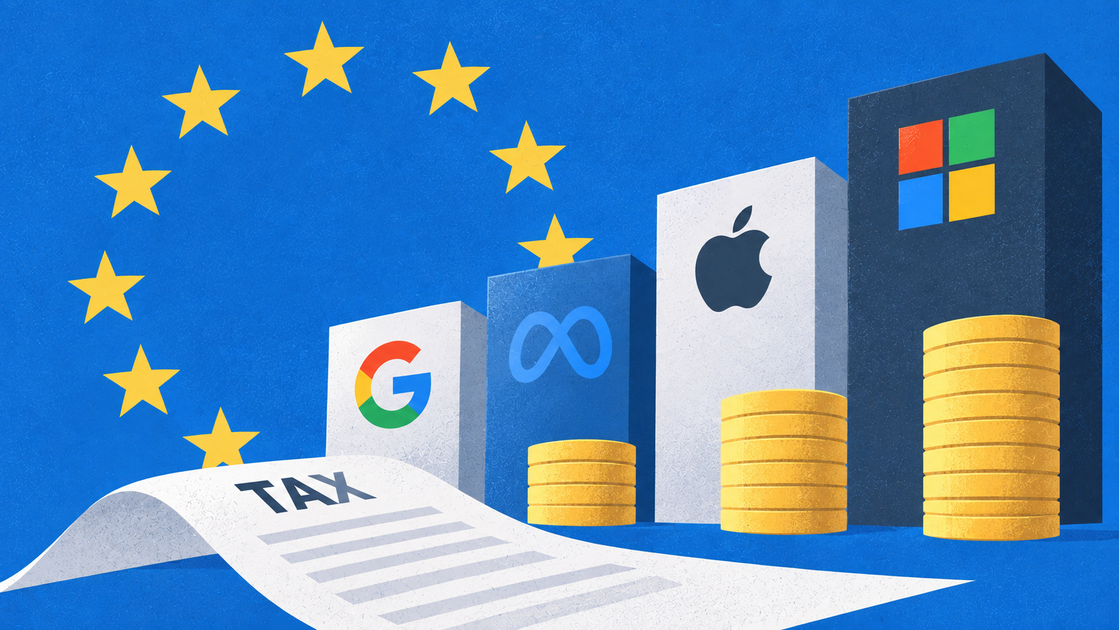
The European Commission is exploring ways to collect more money from Apple, Meta, Google and other tech giants through a broader levy on large companies.
Officials are considering changes to an existing proposal called Corporate Resource for Europe, or CORE, according to Financial Times reporting cited by Reuters. The levy would apply across industries, bringing technology companies into a wider system of corporate contributions to the EU budget.
Under the current proposal, qualifying companies with annual revenue above €100 million would pay a fixed amount each year, ranging from €100,000 to €750,000 depending on revenue. The rules would cover EU-based companies and permanent establishments of foreign businesses. These payments are still proposed, not charges companies already pay.
For large multinationals, those amounts would represent a small fraction of their earnings. Brussels is now considering how to revise the proposal to collect more, including from US technology companies, the FT reported, citing six officials familiar with the discussions.
The Commission introduced CORE in July 2025 as part of its plans to finance the EU’s 2028–2034 budget. It estimated that the original proposal would generate €6.8 billion annually on average.
A broader corporate levy is also intended to avoid a confrontation with Washington over a tax specifically targeting digital services.
“Some (EU) capitals are opposed to a pure digital tax because they don’t want to upset the Americans, and many more are opposed to CORE,” an EU official told the FT. “The solution is to expand (the tax) to cover pretty much all the big companies.”
In June, President Donald Trump threatened a 100% tariff on all goods from any country imposing a digital services tax on American companies. The US Trade Representative’s office has argued that such levies discriminate against US businesses, which dominate the sector.
Changes to the EU’s revenue system require unanimous approval from all 27 member states, giving each government the power to block an agreement.