Apple is putting cameras in AirPods: Everything we know about its first wearable AI device
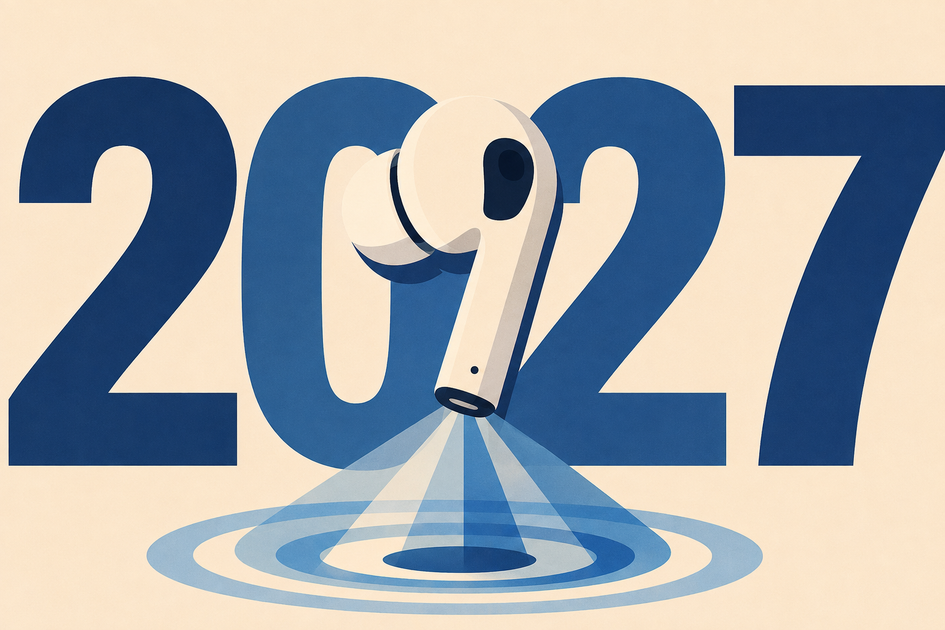
Reports have been piling up for months that Apple is working on a new pair of AirPods with built-in cameras.
If they make it to market, these could be the first AirPods built around AI as much as audio. The cameras aren’t meant for taking photos or shooting video. They would give Siri and Visual Intelligence a live view of the wearer’s surroundings.
That could let AirPods understand what you’re looking at without involving an iPhone. You might ask Siri about an object in front of you, save something you’ve spotted for later or get walking directions that take your immediate surroundings into account. We’ve pulled together everything that has surfaced so far about the upcoming device, from how its cameras could work to its design, AI features and possible release date.
How Apple accidentally revealed AirPods with cameras
In August, Apple inadvertently included a demo of the unreleased AirPods in macOS Tahoe 26.7.
The video shows someone holding up a book for the AirPods to identify. The voiceover describes Visual Intelligence as a way to make the world around you “saveable” — spot something worth remembering, and Siri can keep it for later.
There are more clues in the code itself, including references to setting up Visual Intelligence on AirPods. The system can even warn users when their hair is covering the earbuds and interfering with recognition.
The cameras aren’t for shooting video
These don’t appear to be tiny wearable video cameras. Code in macOS Tahoe 26.7 points to bursts of still images captured for Visual Intelligence, with no sign of a dedicated video-recording mode.
Both earbuds would have their own camera. They can capture synchronized RGB images with matching frame IDs, giving the system two views of the same moment and potentially a better sense of depth and the space around the wearer.
During active use, likely when Siri is invoked, images can be captured at 640×640 pixels. A passive mode drops that to 320×320. The sensors themselves appear capable of higher resolutions, suggesting Apple is deliberately keeping image sizes down to match the processing task.
What could camera-equipped AirPods do?
By feeding Siri information about the wearer’s location and surroundings, the cameras could let the assistant respond to questions about whatever is currently in view.
Potential uses include:
- more precise turn-by-turn walking directions;
- context-aware reminders;
- recognition of nearby objects;
- 3D mapping of the surrounding space;
- using Visual Intelligence without opening the camera on an iPhone.
Visual Intelligence can already identify plants, animals, landmarks, artwork, books and other objects through an iPhone. AirPods would give the same system another pair of eyes, without requiring the user to point a phone at anything.
AirPods could keep track of their surroundings in the background
The code also references a passive capture mode that could give AirPods some awareness of their surroundings even when the user isn’t actively asking Siri a question. Image capture could be triggered by nearby speech, changes in sound, shifts in posture, head turns and other signals.
Head movement is accounted for as well. The system includes image correction to compensate for motion and can discard frames that are too blurry to use. Some analysis, including detecting people, could happen directly on the earbuds.
Will there be a camera indicator?
Apple appears to be anticipating the obvious privacy concerns that come with putting cameras into a pair of earbuds. The leaked material points to a hardware LED that could light up whenever images are being captured.
People nearby would then have a visible indication that the cameras are active. A separate light signal could also be used when visual data is being sent to the cloud.
That matters even without video recording. Earbuds capable of capturing their surroundings in the background will inevitably raise questions about when they are looking, what they are seeing and where that information is processed.
The design may look almost the same
The camera-equipped model is expected to stay close to the current AirPods Pro 3 design.
The obvious change would be the cameras built into the stems. The overall dimensions, fit and charging case are expected to remain broadly similar, aside from whatever changes Apple needs to make inside the stems.
So this probably isn’t a radical rethink of AirPods. From a distance, they may look much like the AirPods Pro people already wear, with the biggest changes hidden inside.
Apple may be developing two versions
The leaks are slightly messy because two separate internal versions of camera-equipped AirPods have surfaced.
Most early reports focused on a device codenamed B798. In June, Bloomberg’s Mark Gurman reported that development had been held back by delays to Apple’s new Siri AI features, potentially pushing the product to September 2027 alongside the 20th-anniversary iPhone.
Then another version, B790, emerged. Gurman has previously noted that Apple often develops competing versions of the same product, and B790 appeared to be further along. References to it later showed up in macOS Tahoe 26.7.
Gurman subsequently clarified that AirPods with cameras are not on Apple’s immediate release schedule and aren’t expected before 2027. In his account, B790 is essentially AirPods Pro 3 with cameras, while B798 represents a future generation of camera-equipped AirPods Pro.
Will they be called AirPods Ultra?
There has also been speculation that Apple could introduce the device as AirPods Ultra. The macOS Tahoe 26.7 file that revealed the camera features, however, labels the product as AirPods Pro.
Ultra isn’t necessarily off the table. Gurman has reported that Apple considered the branding for several upcoming products, including the foldable iPhone Ultra, AirPods Ultra and an OLED MacBook Ultra. There is still no firm indication of what these AirPods will ultimately be called.
A new H3 chip
The camera-equipped AirPods are also expected to use Apple’s next-generation H3 chip, with improvements to latency and audio quality.
Cameras and Visual Intelligence would give the chip considerably more work to do than in conventional AirPods, particularly if Apple intends to process some visual information locally on the earbuds rather than sending everything to another device or the cloud.
Which iPhones will they work with?
Since the cameras are being designed around Siri and Apple Intelligence, their headline features will likely require an Apple Intelligence-compatible iPhone. At the moment, that means the iPhone 15 Pro or newer.
The AirPods themselves could still connect to other Apple hardware, but the visual AI features are likely to depend on a compatible iPhone and Apple Intelligence.
How much could they cost?
There is no reliable price yet. The AirPods Pro 3 currently cost $249 in the US, and cameras, additional sensors and a new chip would give Apple plenty of reasons to charge more.
An AirPods Ultra name would also suggest a move further upmarket, should Apple decide to use it. For now, both the branding and any premium attached to it remain speculation.
When will AirPods with cameras arrive?
The references buried in macOS Tahoe 26.7 don’t mean a launch is imminent. Current reporting points to 2027, with September and Apple’s 20th-anniversary iPhone launch looking like a possible window.
What has emerged so far suggests Apple is trying to turn AirPods into its first genuinely wearable AI device. Visual Intelligence already lets an iPhone understand what its camera is pointed at. Cameras on AirPods would make the same interaction much less deliberate — look at something, ask Siri about it, and leave the phone in your pocket.